
RedFM: Sexual Health Centre Says HIV Continues To Be A Major Issue In Cork
Speaking to RedFM News Dr Martin Davern of the Sexual Health Clinic in Cork says the stigma surrounding HIV is still there and it's part of the reason that the incidence of the disease is still so high.
2018 saw some of the highest figures reported for HIV incidence
The centre, which offers free rapid testing in locations across the city, is collaborating with the HIV clinic in Cork University Hospital in a bid to combat the illness.
It comes as a new report on the HIV prevention drug PREP found it's safe and highly effective and could prevent 173 HIV infections in the first five years of its implementation.
It's understood the government will introduce the programme this year following consultation with HIQA.
Speaking to RedFM News Dr Martin Davern of the Sexual Health Clinic in Cork says the stigma surrounding HIV is still there and it's part of the reason that the incidence of the disease is still so high:
Listen: http://www.redfm.ie/news/cork/sexual-health-centre-says-hiv-continues-to-be-a-major-issue-in-cork/

Cork Independent: Sexual Health Centre launch five year plan
Delivering sexual health education programmes to individuals with an intellectual disability is one of the goals in the Sexual Health Centre’s five-year strategic plan, which it launched this morning.
Delivering sexual health education programmes to individuals with an intellectual disability is one of the goals in the Sexual Health Centre’s five-year strategic plan, which it launched this morning.
Other goals include providing sexual health services online, face-to-face and over the phone as well as via user-friendly publications and communications and delivering outreach programmes to inform and support young people in out-of-school settings.
The plan’s primary focus lies on forging strategic partnerships, expansion of the locally-centred services and the enhanced use of modern and digital channels for improved client communication.
In the next five years, the Sexual Health Centre aims to further normalise the current perception of sexual health in Cork and ensure that all communities have access to the most up-to-date and innovative sexual health programmes. The Sexual Health Centre has been delivering the most in-demand sexual health services to the people of Cork City and county for over 30 years.
By 2023, the Centre commits to the introduction of the services that reflect the growing needs of the local community, including the innovative disability programme, providing sexual health services and education to people with mental or physical disability and providing for individuals experiencing period poverty.
The outlined programmes would be unique to the centre and will be introduced in light of the identified needs and received requests from clients and partner organisations.
Ciarán Lynch, Chairperson of the Board of Directors of the Sexual Health Centre, said: “I’m delighted to launch the Sexual Health Centre’s strategic plan which is an ambitious vision for the work and services provided by staff, volunteers and partners of the organisation for the next five years.
“Throughout the past thirty years, the Sexual Health Centre has been through a number of transformations, navigating and responding to the constantly evolving area of sexual health in Ireland. Over the next five years, the Sexual Health Centre will continue to provide quality, professional services to an evolving community, building on existing partnerships and developing new and responsive collaborations on the journey.”
Cork Independent: HIV prevention programme welcomed
The introduction of a programme designed to prevent HIV has been dubbed as a real game changer by Cork's Sexual Health Centre.
The introduction of a programme designed to prevent HIV has been dubbed as a real game changer by Cork's Sexual Health Centre.
A report on the new programme was published on Tuesday by the Health Information and Quality Authority (HIQA) confirming that the new pre-exposure prophylaxis (PrEP) programme is a safe and highly effective method for preventing HIV in people at substantial risk.
Speaking to the Cork Independent, Executive Director of the Sexual Health Centre, Martin Davoren said: “It is really welcome news. It’s a real game changer. I think in Ireland we’ve really seen the HIV rates going up over the last couple of years which has put us, as a nation, in a very compromising position. PrEP is a safe, effective and cost-saving measure where people can take ownership of their sexual health and will no longer be at risk of contracting HIV in the future.”
PrEP is the most recent development in the field of HIV prevention, involving the pre-emptive use of oral antiretroviral therapy in HIV negative people to prevent future infection.
“Once you take it every day, it’s a very effective measure. Even if you have been exposed to the virus, PrEP will ensure that it doesn’t take hold in your body and you will not contract the virus,” said Mr Davoren.
A PrEP programme involves the pre-emptive use of antiretroviral medication to prevent HIV infection, within a holistic service which includes regular monitoring and testing, as well as advice and counselling on safer sex practices.
On Tuesday, HIQA also launched a public consultation of the new programme in order to hear the public’s opinion before it is finalised.
Mr Davoren said: “They have opened a public consultation and we as an organisation are definitely going to be interacting with that and participating. It’s crucial to get this right. It’s a big step and a big change and we want to be part of the solution.”
Also welcoming the programme was Minister for Health, Simon Harris TD who said: “Many of the people who would stand to benefit from a PrEP programme are from vulnerable or stigmatised groups in our society, so it is important that we continue to work to reach out and encourage more people to get tested and avail of the treatments and supports available.”
HIV is a notifiable disease in Ireland. All new diagnoses notified in Ireland are reported nationally by the Health Protection Surveillance Centre (HPSC). It is estimated that approximately 7,200 people live with HIV in Ireland currently.

Irish Examiner: Cork’s eight sexual health groups unite for better services
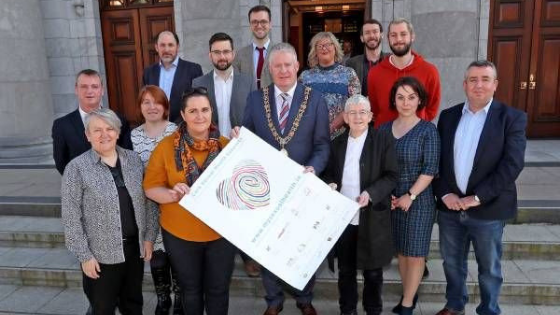
Eight sexual health groups in Cork have joined forces to make their services more visible. The Cork Sexual Health Centre said they hope the united approach will reach more people.
Eight sexual health groups in Cork have joined forces to make their services more visible.
The Cork Sexual Health Centre said they hope the united approach will reach more people.
The centre also said the increase in the number of people seeking its help was a sign that the stigma around sexual health is reducing. They have also seen an increase in the number of people seeking post-abortion counselling, in the wake of the legalisation of abortion here.
One client who approached the centre recently was seeking help more than a decade after having had an abortion.
The details emerged at the launch of the first inter-agency online portal to unite all eight sexual health organisations in Cork. These are: the Sexual Health Centre; the city’s Youth Health Services; the Gay Project; LINC; the Sexual Violence Centre Cork; the city’s Sexual Assault Treatment Unit and STI/GUM clinic at Cork’s South Infirmary Victoria University Hospital (SIVUH), and the Cork HIV Treatment Clinic in CUH.
The groups all work in the areas of sexual health and wellbeing, sexually transmitted infections (STI) testing, sexuality, HIV treatment and support, sexual violence, and healthy relationships.
Their new website, mysexualhealth.ie, is a one-stop-shop for easy and direct access to the organisations and their services, which cover all matters of sexual health, healthy relationships, and wellbeing.
They said this website is the first, fully dedicated site of its kind in Cork to provide this range of information.
It was developed thanks to Healthy Ireland funding, made available through the Local Community Development Committee and Cork City Council.
Dr Martin Davoren, the executive director of the Sexual Health Centre, said all the groups share common goals and the inter-agency approach should help them get their message out more widely and, ultimately, make their response more effective.
Sexual health is an integral part of everyone’s life. It is fantastic to see the launch of this interagency resource for the people.
The centre’s spokesperson, Nadia Reckmann, said that last year the centre saw a dramatic increase in the number of people calling its helpline, seeking advice, and looking for STI screening. The figures will be published in its annual report in a few weeks.
“There is a strong stigma when it comes to sexual health, but the fact that more people are ready to come forward, and ask for help, is a good sign.
“People feel more free to come forward and talk about the issues,” she said.
Daniel Quealey, the clinical nurse manager in genito-urinary medicine at the STI/GUM clinic at SIVUH, said the website will create greater awareness and understanding of the full range of sexual health services and supports available in the city.
“Each organisation will bring their own unique level of expertise to the forum and we will all strive to create a reliable, evidence-based resource for those seeking information on any sexual health-related concerns,” he said.
Lord Mayor Cllr Mick Finn, who launched the website, said the united approach will help make the services more visible in the community.
Cork Independent: Sexual health in the spotlight
The news came as eight sexual health organisation yesterday to launch a new website, mysexualhealth.ie, dedicated to providing information and direction in matters of sexual health, healthy relationships and wellbeing in Cork city.
Requests for information about sexual health are increasing every year and stigma still persists in society, it’s been revealed.
The news came as eight sexual health organisation yesterday to launch a new website, mysexualhealth.ie, dedicated to providing information and direction in matters of sexual health, healthy relationships and wellbeing in Cork city.
The portal aims to ensure that the people of Cork have easy and direct access to the sexual health services by providing an overview of the existing organisations, their focus and contact information.
The participating organisations include the Sexual Health Centre, STI clinic, Youth Health Services, Gay Project, LINC, Sexual Violence Centre Cork, Sexual Assault Treatment Unit and Cork HIV Treatment Clinic.
Dr Martin Davoren, Executive Director of the Sexual Health Centre said that a service like this was needed in Cork city.
He said: “We get loads of calls every year and many of those calls would be better placed with LINC or the Sexual Violence Centre Cork for example. Our requests for information are increasing year-on-year and it’s not only to do with STIs.
“People may also have questions about their sexuality or about sexual contact they’ve had. We need to think about contraception too which many people have questions about. Dr Google can be lethal with differing information out there, so people are ringing us for information. Whatever the issue, we can now refer them to the new website.”
Thanks to the one-stop-shop nature of the portal, visitors to the website will be able to easily differentiate between the organisations and locate the one that suits their needs best.
Due to the increased importance of the digital accessibility of services, the online portal will ensure that all groups of population can easily get in touch with the organisation of their choice in the format they feel most comfortable.
From dedicated counselling to exhaustive information and from screening and testing, the mysexualhealth.ie organisations ensure that people of Cork have access to and support in all matters of sexual health.
Daniel Quealey, clinical nurse manager in genito-urinary medicine at the STI/GUM clinic at Cork’s South Infirmary Victoria University Hospital, said: “This initiative will definitely create greater awareness and understanding of the full range of sexual health services and supports available to the people of Cork.
“Each organisation will bring their own unique level of expertise to the forum and we will all strive to create a reliable, evidence-based resource for those seeking information on any sexual health related concerns.”
Echo: Cork becomes first county to establish Sexual Health Network
Eight sexual health charities and organisations in Cork came together today to launch www.mysexualhealth.ie, the first portal fully dedicated to providing information and direction in matters of sexual health, healthy relationships and wellbeing in Cork city.
Eight sexual health charities and organisations in Cork came together today to launch www.mysexualhealth.ie, the first portal fully dedicated to providing information and direction in matters of sexual health, healthy relationships and wellbeing in Cork city.
The participating organisations include the Sexual Health Centre, GUM / STI clinic, Youth Health Services, Gay Project, LINC, Sexual Violence Centre Cork, Sexual Assault Treatment Unit and Cork HIV Treatment Clinic.
The focus areas of the represented organisations include sexual health and wellbeing, STI testing, sexuality, HIV treatment and support, sexual violence and healthy relationships.
The portal aims to ensure that the people of Cork have easy and direct access to the sexual health services by providing an overview of the existing organisations, their focus and contact information.
“Sexual health is an integral part of everyone’s life,” said Dr Martin Davoren, Executive Director of the Sexual Health Centre who thanked the Healthy Ireland funding made available through the Local Community Development Committee and Cork City Council for supporting this project.
“It is fantastic to see the launch of this interagency resource for the people of Cork where individuals can access the information they need in a single website,” he added.
“This initiative will definitely create greater awareness and understanding of the full range of sexual health services and supports available to the people of Cork,” said Daniel Quealey, clinical nurse manager in genito-urinary medicine at the STI/GUM clinic at Cork’s South Infirmary Victoria University Hospital.
“Each organisation will bring their own unique level of expertise to the forum and we will all strive to create a reliable, evidence-based resource for those seeking information on any sexual health related concerns.” The launch of www.mysexualhealth.ie will take place today at City Hall.
Echo: Cork Sexual Health Network to launch this week
A Sexual Health Network, aimed at raising awareness of the sexual health services in the region, is to be launched in Cork this week.
A Sexual Health Network, aimed at raising awareness of the sexual health services in the region, is to be launched in Cork this week.
Cork will become the first county to have its own Sexual Health Network which is a partnership involving a number of sexual health initiatives and groups across the region.
The Cork Sexual Health Centre, the Gum STI clinic in SIVUH, the HIV clinic in CUH, Cork Sexual Violence Centre, Sexual Assault Treatment Unit, Cork Gay Project, Lesbians in Cork (LINC) and Youth Health Service have come together to establish the network.
It is hoped the network will provide a platform where the organisations can share knowledge and resources and support the client in terms of effective referral to the services they need.
Information will be available online at mysexualhealth.ie and via a billboard and bus shelter advertising campaign being run for two weeks from March 27.
The initiative has been funded by Healthy Ireland through the Local Community Development Committee and Cork City Council.
The initiative will be launched in City Hall on Wednesday, just weeks after it was revealed HIV is on the rise across Ireland.
There were 531 new HIV diagnoses in 2018, the highest number for a year on record.
Ireland’s rate of new HIV diagnoses is now almost double the European average per head of population.
Manager of the Cork Sexual Health Centre, Catherine Kennedy called for more conversations and greater education on the topic to encourage greater uptake in HIV testing.
“Any increase is an area of concern when it comes to sexual health,” she said.
“More and more young people we’re meeting are completely unaware of HIV.
“It’s completely gone backwards instead of forwards.
“It’s also important for people to have a chat about testing to normalise it.” Ms Kennedy encouraged people to get tested to ensure the disease does not spread further.
“We have free rapid testing here in the centre and also in outreach facilities,” said Ms Kennedy.
“Not everyone knows their status and it’s important that they do.
“The medicine for HIV has advanced so much now that when a person does know they have it, they can prevent further spread,” she added.
“People who know their diagnosis and start their treatment early can ensure they live a longer, healthier life and they don’t have to worry about further spread.
“The diagnosis will stop with them.”

Independent: 'After my 'chlamydia surprise' I am now not ashamed to say I get tested regularly for STIs'
Testing positive for chlamydia at just 23, Michelle Heffernan, now aged 30, believes that sexual screening and sexual health need to be a bigger part of the conversation in Ireland.
Testing positive for chlamydia at just 23, Michelle Heffernan, now aged 30, believes that sexual screening and sexual health need to be a bigger part of the conversation in Ireland.
I was 23 when I had my first STI test. I had been sexually active for five years, but never sought one; I had mostly always used protection and besides, I didn't have any symptoms. So it was a real shock when the test came back positive for chlamydia.
Like most other young women my age, my major concern up to this point had been crisis pregnancy. A Catholic all-girls school had driven home the "perils" of sex before marriage with warnings of murderous abortions. I distinctly recall being told not to have sex at all unless I was prepared to have a baby. Countless times in those first few years of college, I had panicked I was pregnant, always laughing after a home test at my melodramatic paranoia. Not once had I thought about STIs, or worried about the inflammatory disease, cancer or infertility they could cause.
According to the HPSC (Health Protection Surveillance Centre), in the first week of February alone, 216 people in Ireland have tested positive for chlamydia, 15 for HIV and 20 for syphilis. I caught my infection early then, and thankfully it was treated swiftly. But it was pure chance I had been tested in the first place. I had really only gone along to support a friend. Why had I never worried about sexually transmitted infections before? Why weren't my friends talking about STIs as much as they did about crisis pregnancy? And why had no one told me that STIs could have no symptoms?
Martin Davoren is Executive Director of the Sexual Health Centre in Cork, an non-profit organisation dedicated to positive sexual health. According to Martin, Ireland has seen a huge increase of sexually transmitted infections across all demographics.
"We're seeing an increase in chlamydia, gonorrhoea, HIV, genital warts... and it's not just a young person's problem. We're seeing people in their 30s, 40s, 50s and 60s all presenting with STIs." I asked Martin why people aren't getting tested, and sure enough, he pointed the finger towards lack of education and information.
"A lot of people might think coming in to a clinic is a scary experience. It's blood tests, a urine sample (for men), it's not a scary experience. People don't know what supports are available to them, free of charge, and they don't recognise what a sexual health screening is going to be - and that is down to sexual education."
I was still curious if I had somehow missed the class about asymptomatic STIs and sexual health centres. I opted to survey my own peer group on their knowledge of sexual health screening, asking 160 of my Facebook friends to answer questions about their sexual health. (Yes, it was anonymous and no, it was not easy to convince them to do it!) I didn't know whether to be relieved or appalled when I found that their ignorance matched my own.
Out of the 100 men I surveyed, 35pc had never had an STI test. Some 50pc of the guys had no idea that a routine check for men was non-invasive, meaning some had probably needlessly avoided it. Out of the 60 women I questioned, over half had no idea that STI tests were available free of charge from HSE clinics and free clinics like the Sexual Health Centre, while 25pc had no idea that an STI could have no symptoms. I couldn't believe these results. Here was a group of well-educated, attractive, ambitious, and all round conscientious people, and some of them could potentially, unbeknownst to themselves, be carrying infectious diseases and infecting others.
I could now completely understand why chlamydia rates have risen ten-fold since the 1990s. People are having more sex, which is wonderful, but there's been no relevant increase in the quality of their education. Indeed the Sexual Health Centre recently conducted a focus group with 98 UCC students and found that all students agreed crisis pregnancy was their major concern - not STIs. Contraception, consent, copulation, these all do need to form part of a healthy sexual education, but at some point we're missing the slides on STIs and for the sake of our own health, and the public health, we need to redress this, especially when we're now seeing some STIs becoming over-diagnosed, over prescribed and antibiotic resistant.
I asked Martin what we can do ourselves to move society more towards a positive sexual health experience, and he rightly recommends making sexual screening and sexual health part of the conversation. "Everyone is having sex," Martin says. "Sexual health is part of everyone's life… I believe sometimes we don't have the support - no one ever taught us the tools on how to speak about sexual health. Stigma and judgement play a massive role in Irish society. A girl who carries condoms is not a sexual deviant, she's a person taking control of her own life.
"There's a role to normalising sexual health and it's the responsibility of every single individual in Ireland to be a listening ear, to know services so you can protect yourself, to advise a friend or colleague, not to make a joke of it; because its serious, sometimes and it's part of our lives".
Seven years after my 'chlamydia surprise' I am now not ashamed to say I get tested regularly for STIs. If I'm considering a new sexual partner, I ask them about their last test before 'I give the green light'. I encourage my male and female friends to get tested, reminding them it's completely free (and you get free condoms there too) and I have even educated my parents to be STI wise now they're both back on the dating scene.
I believe Martin Davoren is right when he says, "everyone has a right to positive sexual health". Everyone is having sex, sexual health is a part of everyone's life and it's just as important to look after your sexual health as it is your mental health, cardiac health, gut health and so on. We are now finally opening up the conversation here about sex and we need to make sure it's as open and educated as possible.
It is our State's responsibility, but also our own, to have the chats, check the facts, get tested, get protected. And so, from Martin, and myself, I wish you all some very happy, very healthy and totally safe sex.

Virgin Media News (VIDEO): Valentines 2019
Irish pharmacies are giving away free condoms to promote safe sex this Valentines 2019 week. It comes as the number of people in Ireland contracting sexually transmitted infections is on the rise.
VIDEO: Irish pharmacies are giving away free condoms to promote safe sex this Valentines 2019 week.
It comes as the number of people in Ireland contracting sexually transmitted infections is on the rise.
Video: https://twitter.com/VirginMediaNews/status/1096103024693575680

The Journal.ie: Most of you said alcohol has affected your decisions around sex - here's what else we learned
For the latest installment of The Health Check with Irish Life Health, we asked you – what do you really make of your sexual health?
WHEN WAS THE last time you had a chat about your sexual health to a partner, friend or medical professional? Maybe it’s a huge source of worry for you, or maybe you don’t think about it at all.
While the number of teenage pregnancies has fallen by 64%, we haven’t been paying the same care to sexually transmitted infections – there’s been a sharp rise in HIV, syphilis and gonorrhea and the level of STIs diagnosed among teenagershas grown by 8.3%.
For the latest instalment of The Health Check with Irish Life Health, we asked you – what do you really make of your sexual health? While most said it wasn’t a worry (3.7/10), when asked how likely they’d be to attend a GP for it, readers rated 4.7/10 . Similarly, the majority said they’d be likely to seek information about it online (8/10).
To gain some insight into your ratings, we put the results to genito-urinary consultant and sexual health expert Dr Derek Freedman of Dublin’s STD Clinics and executive director of Cork’s Sexual Health Centre, Dr Martin Davoren.
So, how is our sexual health?
Readers rated their feelings around their sexual health as 6.6/10 for satisfaction with it and 3.7/10 as a source of worry. For both experts, this is quite reflective of what they encounter day-to-day: “That would be what I’d expect as sexual health is as variable as the population”, explains Dr Freedman:
There’s a huge spectrum of feelings about sexual health – we’ve some people who are very careful and a wide range of people who don’t think about it too much and a small group who just don’t care.
Dr Freedman says that the most important thing is that “we should be more open about it and feel at ease to discuss it”. Dr Davoren says that while there’s still “a large amount of stigma around the topic”, Irish people are becoming more open in relation to their sexual health:
Sexual health has evolved dramatically in Ireland over the last 30 years if you consider our attitudes to abortion care, sexuality, consent and sexual education. We’re really at a juncture right now.
In his eyes, the change to becoming more open “has to come with sexual health and it will – look how brilliant that was for us as a nation when it happened with mental health”.
Discussing it with doctors
However, our readers rated how likely they would be to attend a GP for their sexual health as only 4.7/10 and Dr Freedman says that it’s a common problem he encounters in his clinic:
I think privacy is a big thing for patients – people don’t like to put their escapades on the table if they’ve known their GP for a long time.
Dr Davoren agrees: “It’s such an intimate topic, often people would rather go to a private anonymous service, especially if they’ve known their GP since childhood”. This is why he advises that if you do feel this way, you can visit your local clinic instead for total anonymity.
This factor might explain why there were almost 4,000 calls to Sexual Health Centre’s anonymous helpline in 2017: “People are often unsure of where to find the best information and want a professional to answer their most private questions.”
When it came to how easy it was to have these conversations with their GP, readers rated 6.4/10. This could explain what Dr Freedman refers to as what doctors call “door handle conversations” – that patients sometimes leave the question that’s most making them anxious until the end of the consultation, often after a doctor has put away their notes.
Dr Davoren reminds that in this case, every person has a sexual health history, including the doctor they are speaking to. He gives the following advice:
Take a breath and realise that everyone has been there at some point – tell us why you’re worried and what questions you’d like an answer to. You’ll feel a lot better when you get these answers.
According to Dr Freedman, the worst possible thing you can do when you’re worried about having an STI is to start taking antibiotics before you’ve had a full screening: “This can conceal an infection for many years.”
It can also lead to multidrug antibiotic resistance with infections such as gonorrhea and mycoplasma genitalium, as seen in here in Ireland, and worldwide.
When do we tend to get ourselves in trouble?
While the majority of readers said they’d be likely to have safe sex in a new relationship, most also rated that alcohol has previously affected their decisions around safe sex (6.8/10). Dr Freedman calls this a “huge issue”: “I would say alcohol would account for over 70% of people who come in for an STI screening.”
The most common situation where he tends to encounter patients who haven’t had safe sex is the case of one-night stands with alcohol:
This is where major problems arise and people are having unprotected and unplanned sex under the influence and putting themselves at great risk.
Dr Davoren agrees that alcohol can be a major issue for safe sex: “Risk-taking happens in clusters”, just like social smoking usually occurs when drinking. Secondly, alcohol is known to reduce inhibitions. It’s something that his team encounters often in the clinic:
We’d see individuals who are nervous after a night out who had unintended or unprotected sex and are worried about STIs, relationship choices, dignity, respect, consent and want to talk to us.
The other major risk we can take with our sexual health is assuming that if we had caught something, that we’d have symptoms. Readers rated their ability to recognise STI symptoms as 6.4/10, a figure that worries Dr Freedman, who says that the figures show a “total lack of knowledge of readers because no symptoms are reliable”. He explains:
Only around 10-20% actually experience symptoms and the most serious STIs are usually silent. Many look up “Dr. Google” with non-specific symptoms or images, and obtain a long list of possibilities. This can lead to a huge amount of anxiety which is usually misplaced.
He explains that infections can take “anywhere between two days and ten years to develop”, so if you are worried about an infection it’s imperative to have a full comprehensive screening. Especially if you develop a growth, sore, wart or ulcer, Dr Freedman says you need to be screened and assessed immediately.
Dr Davoren agrees: “If you are waiting for a sign, it’s really important to get tested – it may never appear.” However he adds that if you are seeing any discharges, you should definitely make an appointment with your GP or local STI clinic.
Secondly, it’s very important that you don’t rely on self-examination which does not compare to a face-to-face consultation with a professional, explains Dr Freedman: “You can’t examine yourself – particularly for girls or men who have sex with men and may have interior lesions.”
How can we have better sex?
With his patients, Dr Freedman has three important points – the importance of ‘quality sex’: “being with someone you know and that you can have a good relationship with”. Secondly, the idea of ‘slow sex’: “a bit like the mindfulness movement – you savour it”. Lastly, he says that we should view it as “giving sex, not getting – it’s a valuable gift you can give.”
Secondly, he says that communication should be a key component of any sexual encounter, and has the following advice for those who are single and likely to have new partners:
Talk to the person you’re thinking of having sex with, get their name and phone number and start off with a condom for any sexual activity.
Dr Davoren echoes that good communication skills are crucial for any positive sexual relationship: “Talk to your partner, say what you want and what you don’t want, what you enjoy and what you don’t enjoy – whether you’re single or monogamous.”
And if you’re unhappy about any aspect of your sexual health: “Ask a question or get support from a professional.” He adds: “Sexual health is an integral part of everyone’s life and we all have a right to good, healthy relationships.”
Irish Examiner: Study shows the psychological and cultural stigma felt by those who are HIV positive
The Sexual Health Centre in Cork, which launched The Lived Experience of HIV-positive Young Adults, said it is the first time the voices of this demographic have been heard.
A young woman who tested positive for HIV has described how she felt like "throwing" herself in the river when she received her diagnosis.
A young man terrified at disclosing his HIV positive status describes feeling like “someone who has leprosy".
The extreme emotional distress brought on by a HIV diagnosis is highlighted in a series of interviews with three young adults in Cork who are HIV positive and whose experiences are recorded in a new report.
The Sexual Health Centre in Cork, which launched The Lived Experience of HIV-positive Young Adults, said it is the first time the voices of this demographic have been heard.
The study identifies three prevailing themes: the psychological impact of HIV diagnosis; the culture of HIV-related stigma and the associated lack of knowledge; and the significance of support services.
The participants, ranging in age from 28-33, described feelings of isolation in the immediate aftermath of a positive diagnosis, thoughts of suicide and excessive time spent ruminating on their HIV status.
One man, identified only as Noah, describes how he stopped taking his medication “because I was just angry at myself and angry at my life and I just wanted to end my life”.
Moreover, he couldn’t stop thinking about his HIV status “it’s something that keeps coming into my brain and you know, I don’t function very well”.
A young woman, identified as Sophie, describes how she feels her future is lost and possibly, her prospect of motherhood.
It’s just hard like, not knowing will I ever be in a relationship again.” She also describes why she chose not to tell people: “They’ll be like, 'stay away from her', 'how the fuck did she get that?..Like she’s sleeping with everybody’.
Risk of rejection was “at the forefront of the participants’ minds”. They only decided to disclose “when they reached a threshold of emotional distress whereby the risk to their health as a result of isolation outweighed the risk of rejection".
A young man, identified as Jack, describes how when he started disclosing “it was a weight being lifted off my shoulders”.
All the participants believe the stigma they faced was “culturally entrenched due to a lack of education”, and that people tend to think the terms HIV and AIDS are one and the same thing.
The stigma extends to clinical settings, participants said, with Jack, as a then teenager, feeling “completely dismissed by clinical staff” when seeking support post-diagnosis. All participants spoke very favourably of their peer support experience.
Aoife Burke, researcher at the Sexual Health Centre and author of the report, said, almost half of [508] new HIV diagnoses in Ireland in 2016 were in people under the age of 35. She said the results of the study “can help bring us one step closer to open dialogue and accepting and addressing the existing issues”.
The report’s findings were presented by Ms Burke in the run-up to today, World AIDS Day.
Echo: My day-to-day life in Cork with HIV
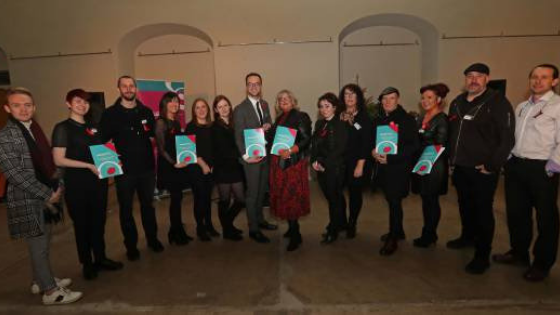
At the launch of a new exhibition, PhotoVoice HIV, from the Sexual Health Centre, the voices of people living with HIV can be heard quite clearly in the collection of images of day-to-day life taken by people living with HIV.
A PICTURE tells a thousand words. For those whose voice is rarely heard, the result can be powerful.
At the launch of a new exhibition, PhotoVoice HIV, in St Peter’s Exhibition Centre, those words can be heard quite clearly in the collection of images of day-to-day life taken by Cork people living with HIV.
Syringes for subcutaneous injections of medication, a breakfast of oranges and tablets, unopened birthday cards bought each year for a son who died of the illness: many of the pictures are moving and some are bleak.
But not all: Austin Kelly, from Blackpool, shared a photo of his favourite treat, a delicious cup of cream-topped flavoured hot chocolate, alongside a photo of the door to his doctor’s surgery. It’s an attempt, he says, to show balance, the moments of comfort and pleasure that are needed by us all, not least those living with HIV.
“I wanted to show some positivity too,” says Austin. “I went out that morning to my doctor’s for a check-up and, coming back through town, it started raining and I thought, I’m going to treat myself to a hot chocolate. I put the two pictures together to put a little twist on it and make it more uplifting.”
Austin is 37 and was diagnosed with HIV in 2012.
“It was a shock,” he says. “I was getting checked out on a regular basis and I got back together with someone and so I decided to go in for a test and was positive.
“I told my best and oldest friend first and that helped me to face it. A lot of people like to pretend that there’s no stigma, but it’s still all very hush hush because there’s an older generation who would just prefer not to know these things. They just don’t understand.”
Apart from his vices of cigarettes and coffee, Austin’s health is fine. When he started his course of treatment, he was on four tablets a day. Now this is reduced to one, and like all sufferers he needs regular doctor’s visits to monitor his health.
A total of 454 Irish people have been diagnosed with HIV so far this year, according to the Sexual Health Centre. There are between nine and ten new diagnoses per day.
A new report by centre researcher Aoife Burke has revealed the isolation, stigma and sense of hopelessness faced by young people living with the disease.
All three of the young Cork people living with HIV that Aoife interviewed for her report said that they suffered suicidal ideation after their diagnosis and that they lived with a profound sense of isolation.
Even though the prognosis and life expectancy for HIV sufferers has advanced hugely since the introduction of antiretroviral drugs and, more recently, the introduction last year of PrEP (Pre- Exposure Prophylaxis) to prevent HIV negative people who have been at risk from contracting the virus, lack of basic knowledge around the once-fatal condition, as well as stigma attached to it as a disease contracted through sexual activity or injecting drug use, is still very present.
As many as 40% of Irish people still believe HIV can be caught through sharing a cup or a toilet seat with an infected person, a recent survey has shown. This ignorance and stigma make it difficult for sufferers to disclose their condition.
Austin says that telling his family was a struggle.
“They didn’t take it very well because we already lost my brother to another illness a few years ago, which was very hard,” he says. “I did say it to my sister and my younger brother, but a few years later after lots of hospital visits, my parents figured out that I had it. I think people need space to take it in and deal with it whatever way they can.”
It is of course absolutely vital that HIV sufferers disclose their condition to potential sexual partners.
“It’s a difficult subject to bring up,” Austin says, “So when it comes to meeting someone, that’s very hard. But I am fully honest about my status.”
If there was one message Austin could get across about living with HIV, what would it be?
“It’s not the end of the world. We’re still brothers, sisters, fathers, husbands and we just want to get on with our lives.”
Will Kennedy, originally from The Glen, was diagnosed 11 years ago, and volunteers at the Sexual Health Centre, where he’s currently developing a peer mentoring programme to share his experiences with those living through the difficult days of early diagnosis.
“It just does something to you, to hear that diagnosis,” he says. “But I decided I was not going to climb into the HIV closet. I was going to become an activist, and that’s what I’ve been doing.”
Will had also worked in the Gay Men’s Health project since 1994. Although he’s keen to share a message of hope with HIV positive people and show that it’s possible to live a good life with the condition — Will works out six times a week and his viral load has now reached undetectable levels — his ultimate goal is to eradicate the disease.
HIV is on the rise in Ireland: 2017 was the year with the largest number of new diagnoses since records began, according to figures from the Irish Health Protection Surveillance Centre (HPSC). More than half of these cases were amongst immigrant communities.
While almost 50% of new cases were amongst MSM (man who have sex with men), nearly one in five cases were contracted through heterosexual sex, while 4% of cases were contracted through IV drug use.
Will says there’s no need for the rise in new cases, but that education is vital.
“With PrEP and everything that’s out there, we shouldn’t be having 454 new cases,” he says. “It’s not complacency, because complacency is when you know about something and ignore it: young people are not even hearing about it. They hear about ‘STIs’.”
In part, Will believes that the Irish blind spot in tackling the issue is a hangover from old Catholic Ireland’s taboos on discussing things related to sex.
“Money is poured into cancer and diabetes campaigns, you see ads on the telly and everything,” he says, “but anything relating to sex seems to be at the bottom of the pecking order when it comes to funding.”
Tomorrow is World Aids Day, and in Cork, the occasion will be marked with a park run in Ballincollig Regional Park.
Cork Sexual Health Centre wants the run to highlight the importance of regular HIV testing for everyone and the need to ‘Know Your Status’.
Will is going to be taking part.
“It’s great that we’ll all be doing this in the t-shirts,” he says.
“Visibility is really important, for education and to improve the lives of people living with HIV.”
World AIDs Day Park Run is in Ballincollig Regional Park on Saturday, December 1 at 9.30am.
PhotoVoice HIV exhibition, sharing the experience of people living with HIV, is in St Peter’s Exhibition Centre on North Main Street.

Cork Independent: The Sexual Health Centre's PhotoVoice HIV to take place
PhotoVoice HIV is being organised by the Sexual Health Centre in Cork and will shed a light on existing misinformation surrounding the topic of HIV and aims to challenge the stigma and discrimination related to it.
An exhibition on Leeside next week aims to raise awareness about the reality of living with HIV through the medium of photography.
PhotoVoice HIV is being organised by the Sexual Health Centre in Cork and will shed a light on existing misinformation surrounding the topic of HIV and aims to challenge the stigma and discrimination related to it.
The centre is asking people to take a photo of what HIV means to them.
Chosen photographs will be digitally displayed on the back wall of the Cork Vision Centre in St Peters on North Main Street on 28 November at 5.30pm. A few lines about the photo and its meaning will be read out by staff from the Sexual Health Centre, too.
The exhibition will also coincide with the launch of a report by the centre.
Catherine Kennedy, Manager of the centre, told the Cork Independent: “PhotoVoice gives a voice to people who are often marginalised or who may feel they are unheard. You can take a photo of anything, the more abstract is better at times.
“The photo will come up and it will be narrated on the night. We will read out what the photo means to them. The report launch will allow people to get a realistic view of what it’s like when people receive a HIV diagnosis and the impact that stigma can have on a person. The photos will then back the report up in a positive and negative way. Everyone is welcome on the night and no one will be identified.”
Ms Kennedy said that rapid testing of HIV has been popular at the Cork centre with over 800 tests carried out last year.
She explained: “A repaid test is where you get the result in one minute. It vital that people get these test and that they become a part of their routine life. They are free and don’t take up much time.”
The photo display will be on show in St Peters until World Aids Day on 1 December. The centre will host a run on World Aids Day in Ballincollig Regional Park at 9.30am, where the photos are also due to be displayed.
The Times: Photographic exhibition PhotoVoice focuses on living with HIV
Cork’s Sexual Health Centre is putting together a PhotoVoice project based on pictures submitted from people living with or affected by HIV.
People living with HIV are running an exhibition to give themselves a “voice” ahead of World Aids Day.
Cork’s Sexual Health Centre is putting together a PhotoVoice project based on pictures submitted from people living with or affected by HIV.
PhotoVoice is an international project that aims to represent minority communities through photography. Each image will have a description written by the photographer.
The centre is accepting submissions until tomorrow. The project will be launched alongside a report examining the lives of young people living with HIV at St Peter’s art gallery in Cork city on November 28. The exhibition marks World Aids Day on December 1.
Catherine Kennedy, the centre manager, said that people living with HIV often do not have their experiences represented…
Echo: Foreign students turning to prostitution to pay for rent in Cork
The Sexual Health Centre in Cork city has noticed an increase in the past year in the number of English language students turning to sex work to fund their life here.
HIGH rents and food costs are pushing foreign students into prostitution in Cork city.
That is according to the Sexual Health Centre in Cork city, which has noticed an increase in the past year in the number of English language students turning to sex work to fund their life here.
Centre manager Catherine Kennedy said: “Students coming into Ireland to learn English are turning to sex work because of financial need.”
She said rising rents, food and personal hygiene products are among the costs which English language students are finding difficult to meet, prompting them to turn to offer sex for sale.
She said the trend has emerged in the past 10 months.
And she said: “It is escalating.” Ms Kennedy added that violence against transexual prostitutes is an area which is increasing in the past year and she acknowledged that “there is an always a general undercurrent” of threats of violence against workers in the sex industry.
The centre offers a number of services to sex workers, including a regular meeting of sex workers in conjunction with the Sex Workers Alliance Ireland group. Ms Kennedy said the meetings offer those in the industry an opportunity to compare pricing and update each other on any threats or violent incidents against sex workers locally.
It also provides an opportunity for sex workers to avail of free rapid HIV testing.
There are up to 100 women and transexual sex workers operating daily in the city and in county towns, according to a website set up for sex workers to advertise.
Male escorts are rare on the site, although there are advertisements by male, female and trans prostitutes on other lesser-known sites.
Some of those advertising on the more well-known site arrive in Cork for just one day, while others are here for up to a week at a time.

Irish Examiner: Sex health charity sees surge in enquiries about STIs
A Cork sexual health charity has seen a five-fold increase in requests for support, information and advice, particularly in relation to sexually transmitted infections (STIs).
A Cork sexual health charity has seen a five-fold increase in requests for support, information and advice, particularly in relation to sexually transmitted infections (STIs).
The Sexual Health Centre, which has been in operation since 1987, provides counselling, education, drop-in, free condoms, testing and support services to over 5,000 clients annually. These services are requested via e-mail, telephone and individuals visiting the centre.
A new report examining the range of services requested through the centre from 2014 to 2017 shows that the number of phonecalls the centre received in that period jumped from 607 annually to 3,164.
In 2015, 497 males and 353 females phoned the Sexual Health Centre helpline. This increased to 1,556 males and 1,608 females in 2017.
The number of drop-ins jumped from 1,176 to 1,321 in the same period, while internet inquiries rose from 116 to 824.
The full STI screening provided is the most common enquiry received and rises year on year. In 2017, a total of 1,676 individuals contacted the centre in relation to an STI screening service. This represented an increase from 622 in 2014. Similarly, over 1,000 enquiries were received in 2017 in relation to STI information, increasing from 135 in 2014.
Since 2014 an increase in enquires related to STI information and contraception has also been noted among women. Men are more likely than women to seek condom demonstrations or free condoms.
However, a similar proportion of men and women contacted the centre in relation to STI screening and STI information in 2017.
The centre offers counselling free to clients experiencing a crisis pregnancy, their partners and family members, those who are post-abortion and people living with HIV, their partners and significant others. The total number of counselling clients for post-abortion counselling and HIV counselling have stayed relatively similar from 2014 to 2017.
In relation to crisis-pregnancy counselling, the centre has provided an overall increasing number of sessions to clients since 2014.
The number of HIV clients has remained relatively stable during this time.
Commenting on the figures, report author Gosia Waldowska described the Sexual Health Centre as “an innovative and creative organisation that facilitates people’s need for clear and unambiguous information and support regarding their sexual health, while advocating for positive social change”.
“This report highlights the impact we are having in the community across counselling, testing, education, and information services,” she said.
Echo: Sharp rise in people taking tests for STIs
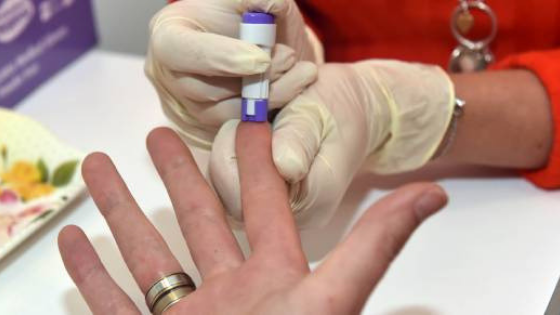
A CORK-based sexual health charity is reporting a five-fold increase in the number of people seeking help, with a sharp rise in those taking tests for sexually transmitted diseases.
A CORK-based sexual health charity is reporting a five-fold increase in the number of people seeking help, with a sharp rise in those taking tests for sexually transmitted diseases.
The Sexual Health Centre provides counselling, education, testing and support services at their premises on Peter's Street and a new report shows demand is rising rapidly.
Dr Martin Davoren, Executive Director of the centre, said: “The Sexual Health Centre has seen a sharp increase in the need for support, information and advice services throughout the past number of years.
"In 2017 alone we received over 5,000 requests for information.”
In 2014, they answered 607 helpline calls but by last year that number increased to 3,164.
They also operate a drop-in service and respond to queries by email.
The rise in queries in Cork echoes the situation nationwide.
The most recent report of the Health Protection Surveillance Centre shows increases in numbers being diagnosed with chlamydia, gonorrhoea and syphilis.
There have been 268 cases of syphilis diagnosed in Ireland this year, averaging almost 10 a week.
This is an increase of 59 on the same period last year. The figures for chlamydia are also rising, with 3,971 cases so far this year, an increase of 139.
Dr Davoren said they do see some patterns in how and when people need assistance.
“We see a lot of phone calls early in the week from people following their weekend out,” he said. “There may have been alcohol or recreational drug use, they may be worried about a partner that they had over the weekend, someone that they met. They may have been a decision while under the influence of alcohol and maybe not have used protection, and they are now concerned about that interaction.”
“The other thing we see is that modern Ireland has seen a real increase in casual sexual partners and people meeting for once-offs,” Dr Davoren said.
“The Tinders and Grindrs of this world are popular ways for people to meet up and get to know each other. And that is great because it keeps us all connected and gives the opportunity to date in modern Ireland. In the Sexual Health Centre, we want to celebrate sexual health, everyone has a sexuality, it is just important for people to be careful and be mindful.”
Last year the Centre gave out 23,000 condoms for free and Dr Davoren said people can call in at anytime to get a supply. He said condom usage is the single most important way to prevent STIs.
“If people use condoms it greatly reduces the risk or catching or transmitting a sexually transmitted infection,” he said.
“So it is a really easy way to protect yourself. If you use a condom, you are protecting yourself and also reducing your anxiety in the days after being with someone. That anxiety is gone because you know you have been safe.”
The Avondhu: Cork charity ‘Sexual Health Centre’ win at prestigious GSK Ireland IMPACT Awards
Five Irish charities were named as winners of the GSK Ireland IMPACT Awards 2017, with each organisation receiving €10,000 in unrestricted funding.
Five Irish charities were named as winners of the GSK Ireland IMPACT Awards 2017, with each organisation receiving €10,000 in unrestricted funding.
The awards, now in their third year, are designed to recognise and reward community-based charities who contribute to the improvement of people’s health and wellbeing in Ireland, as well as acknowledge the positive outcomes these charities have on patients and their local community.
In addition to the €10,000 prize money, each winning charity also receives a video and photography package for their use in promoting their work and services.
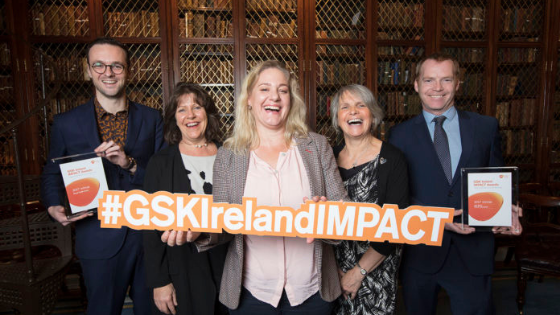
At the GSK Ireland IMPACT Awards 2017 are, l-r: Anne Lawlor (22Q11 Support Group Ireland), Sharon Dagg (Down Syndrome Centre), Petal Pilley (Blue Teapot Theatre Company), Barry Sheridan (Irish Mens Sheds Association) and Martin Davoren (Sexual Health Centre). (Picture: Patrick Bolger)
The five winning charities named at the GSK Ireland IMPACT Awards 2017 were:
22Q11 Ireland Support Group Limited – The national Irish charity for individuals and families affected by 22q11.2 deletion/DiGeorge Syndrome/V.C.F.S
Blue Teapot Theatre Company – Blue Teapot is a multi-award winning Theatre Company, Performing Arts School and Outreach programme for people with intellectual disabilities at the forefront of arts and disability in Ireland. They are committed to high quality theatre, training and the celebration of creativity.
Down Syndrome Centre – The Down Syndrome Centre provides specialist services such as early intervention, speech and language therapy, parent and baby classes to children with Down syndrome.
Irish Men’s Shed Association – The Irish Men’s Shed Association (IMSA) is a member-based organisation which exists to maintain links and share information through the network of men’s sheds in Ireland, ensuring men have the opportunity to maintain and improve their well-being on their own terms and within their own communities.
Sexual Health Centre – Based in Cork, the Sexual Health Centre provides information and support on sexual health without judgement.
Five runner-up charities will receive €2,000 each as part of the GSK Ireland IMPACT Awards 2017. They are:
Alcohol Forum- The only alcohol charity in Ireland working at community level to reduce alcohol consumption levels through the implementation of best practice/needs led/structured activity on community mobilisation and community action on alcohol.
Coeliac Society of Ireland- Provides information and support to people diagnosed with coeliac disease throughout Ireland. They create awareness of coeliac disease, its symptoms and how to live healthy on a gluten-free diet.
Spinal Injuries Ireland- Spinal Injuries Ireland (SII) is the only support and service agency in Ireland for people who have sustained a spinal cord injury and their families. Providing person centred service to assist people to engage fully in society.
Turn2Me- A website that helps people to get help. The site lets people know that they are not alone and facilitates a safe online community space that allows people to open up and reach out for help.
Wexford Mental Health Association- Wexford Mental Health Association promotes positive mental health and wellbeing to all individuals and communities and supports existing mental health services in County Wexford.
The GSK Ireland IMPACT Awards have been running in the UK and USA for nearly 20 years and is in its third year in Ireland. Charities are required to undertake a lengthy and strict entry process for the awards, which includes a review and presentation of their financials, governance, services and membership growth over the previous twelve months, allowing judges to understand the worthy service and care they provide along with their commitment to transparency, patient focus, integrity and respect – all values that mirror GSK’s culture.
The GSK Ireland IMPACT Awards 2017 were judged by a multidisciplinary panel of professionals that included Maurice Pratt, Chair of Barretstown, former Tánaiste and Minister for Health Mary Harney, and Deirdre Garvey, CEO of The Wheel.
CEO of The Wheel, Deirdre Garvey and judging panel member commented: “Community-based healthcare charities are uniquely positioned to help communities experiencing disadvantage and poor health outcomes identify the issues that influence their well-being and to develop and implement solutions. The GSK IMPACT Awards provide much-needed support and recognition for these organisations”.
Jacinta Collins, Communications Director for GSK said: “Supporting local healthcare charities is a vital part of GSK’s mission to help people do more, feel better and live longer. All of the charities shortlisted in this year’s GSK Ireland IMPACT Awards, operate with purpose and passion to improve people’s health and wellbeing in their community. We have been inspired and moved by our winners and the huge contribution they are making to Irish health.”
Irish Examiner: Young people today have a healthy open attitude to sex
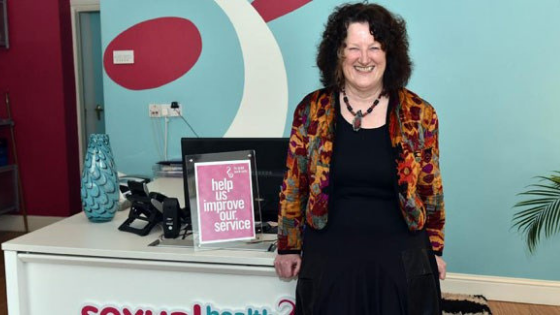
It’s 30 years since the Sexual Health Centre first opened its doors in Cork, a time when we didn’t even have a language to talk about sex, says CEO Deirdre Seery.
It’s 30 years since the Sexual Health Centre first opened its doors in Cork, a time when we didn’t even have a language to talk about sex, says CEO Deirdre Seery. Today, Ireland is transformed, she tells Ailín Quinlan.
On the wall behind Deirdre Seery’s desk hang two beautiful ceramic plaques.
The pieces, she explains, were donated in the 1990s by a local artist, to what was then the Cork AIDS Alliance, for display at a ‘safe’ house in the Cork suburb of Bishopstown.
In this house, a succession of young male AIDS victims lay dying.
Ostracised by a society which didn’t talk about the heavily stigmatised issues of gay sex and HIV/AIDs, the men were visited in secret at this house, and another, by family members too ashamed to care for them at home.
They were looked after by a Public Health Nurse, while general care was provided by the staff of what is now the Sexual Health Centre, of which Deirdre Seery is the CEO.
“We provided 24-hour non-medical care in two rented houses where these people were dying, and we looked after them along with the public health nurse,” Seery recalls.
There were no hospice facilities at the time for people dying of AIDS, she says, so over time two houses were rented, one in Bishopstown, the other in Rochestown, to shelter the men.
“The silence around AIDS was deafening,” Seery recalls.
“Back then people didn’t talk about sex. They didn’t have a language to talk about sex.”
Deirdre Seery arrived at the centre 27 years ago around the time the AIDS crisis was emerging – and in an Ireland which was a very different place to today; condoms, the primary protection against the disease, had only recently been made available over the counter without prescription, homosexual acts were illegal and there was enormous stigma around being gay at the very time the AIDS crisis was reaching its zenith.
In contrast, this year, as the Sexual Health Centre celebrates its 30th anniversary, it will hand out more than 15,000 free condoms and provide a wide range of sexual health services which include the provision of free HIV testing in pubs and talks to schoolchildren about everything from sexting to oral sex.
These days, teenagers – some as young as 13, though mostly they’re over age of 16 - think nothing of walking into the Sexual Health Centre to get information on everything from STIs to how to don a condom.
Downstairs from Seery’s office is the centre’s cheery main reception, which features a fish tank and lots of bright paint - plus a semi-partitioned area which holds a discreet cabinet containing condoms, a contraceptive kit, a dildo and information brochures.
In an age where children in primary school are sexting, where by 14 many teens are familiar with graphic porn, and where the incidence of sexually transmitted infections is spiralling, particularly in the teenage and twenty-something age groups, when teenagers call to the centre, their questions are taken seriously.
“They come in and ask for free condoms. We don’t turn them away because we see it as an opportunity to talk to them about the age of consent and about what they are doing – whether they are comfortable doing it and who they are doing it with,” Seery explains.
When a young person arrives, he or she will meet a sexual health worker who can offer advice on issues ranging from how to use a condom to information about sexual health and the legal age for sex.
The centre, which provides everything from out-of-hours STI testing and school visits to counselling for unplanned pregnancy, abortion and HIV, has eight fulltime staff, two part-time counsellors and six community employment workers who accompany the sexual health workers on their field-work and provide administrative support.
It is almost totally funded by the HSE, though it also receives funding under the Department of Child and Youth Affairs.
Generally young people today have a healthily open attitude to sex says Seery: “They don’t have the same anxieties and they often have the language to express themselves and are open to learning.”
The downside of today’s openness about sex, is that when children and young people begin to become curious about sexuality, they tend to source information through pornography, using their smartphones and computers.
Parents have no control over or, in many cases, much, if any knowledge of the kind of material their children are accessing – and it’s often hard porn, which can leave children and teenagers with very distorted ideas about sex, relationships and even the human body: “Young people often don’t know that people have pubic hair - when they get pubic hair they think there’s something wrong with them,” Seery remarks.
The unreal images of beautifully sculpted physiques, either from internet porn or though social media of various kinds, can also result in poor body image, Seery warns: “Porn stars tend to have boob enhancements and the sex that is portrayed is not real sex.
“There’s no relationship context and the sex can be quite aggressive and involve both multiple partners, and very unusual positions which can hurt people.”
This creates a set of unrealistic norms around sex, she says – and the results are showing up in even quite young children.
Emma Coughlan, one of the centre’s sexual health workers, reports that the kind of information she’s now providing during her primary school visits has changed drastically in the space of just a few years: “Primary school children are more grown up now and more knowledgeable. They are more sexualised now than they would have been even five years ago,” she says, adding that increasingly, teachers are requesting discussions with sixth class pupils around the issue of ‘shifting’ or ‘meeting’ (kissing).
Children are telling each other, she reports, that by the time they leave sixth class, girls must have ‘shifted’ up to six guys in one go or expect to be bullied about their naivety at second level.
“We’re having to do a lot more internet safety talks. Even at primary level they’re sexting pictures of themselves naked to each other,” she explains.
“Five years ago we would have been talking about bodily changes that they should expect, but now schools are a lot more concerned about the internet side of things.”
Centre workers annually visit 56 schools, a mix of primary and second-level in Cork city and county – and says Seery, the centre receives an ever-increasing number of requests from concerned teachers and school principals.
By second year of second-level education the influence of social media and porn on teenagers is blatant, Emma observes.
“It’s changing their views on relationships. There’s an expectation that girls will act like porn stars and pleasure the boys.”
Oral sex is now viewed almost as casually as kissing, she says, adding that she constantly struggles to get the message across to girls that they don’t actually have to behave like porn stars.
“From what I see, boys seem to access porn more than girls and they pass on these expectations.
“Girls don’t seem to focus on their own pleasure – there’s an attitude that sex is a kind of service they provide to boys.”
There’s downward pressure from the porn industry on boys too, Seery adds: “It puts a pressure on boys to be high performers and the majority of young men are not up to this – second level boys feel there is an expectation that if they were to have sex they should be stud machines. They increasingly feel they’re being pressured to perform sexually.”
Teenagers bring these early perceptions with them as they grow older, with the result that relationships are changing she observes — sexual intercourse tends to happen earlier in a relationship now, than it would have previously, she says, though she points out: “There’s nothing wrong with respectful consensual sex.”
However, she warns, there is a pressure to have casual sex and there can be a “vagueness” around what constitutes consensual sex.
“Peoples’ expectations have changed. There’s more of an expectation of casual sex. Things can go from flirtation to sexual intercourse much faster, which means people can think the other person is consenting to something that he or she has not consented to.”
As a result, Seery believes, the issue of consent is now more important and more complex than ever.
“Our new social norms in some ways are a liberation for people in the expression of sexuality but they are also creating expectations that people will live a more promiscuous lifestyle than they actually want to choose for themselves.
“It is all about choice and your ability to state what you want.”

Irish Examiner: How to get through the physical, mental, and emotional impact of Christmas
Four experts explain to Jonathan deBurca Butler how you can enjoy the festive season while preserving your physical and mental health.
Four experts explain to Jonathan deBurca Butler how you can enjoy the festive season while preserving your physical and mental health.
IT’S a wonderful time of the year. For most, the exchanging of presents, the twinkling lights and eyes, and the all-round goodwill that pervades the crisp Yuletide air makes mid-winter more tolerable.
But for some Christmas can be difficult. And it’s not just having to deal with a glut of hangovers and belly aches — there is loneliness , money worries and, of course, feelings of regret over things said or done.
How can we make sure we get through the physical, mental, and emotional impact that this busy time of the year can have on us?
We asked four experts to give us their tips.
Christmas is a time for parties and over-indulgence but Mark Beddis, pharmacist with McCabe’s Pharmacy tells us how we can help alleviate the pain.
“Everyone stocks up on the Panadols and Neurofens and the Alka Seltzers. It is party season, so things like Gaviscon for heartburn and the like would sell a lot more.
"People tend to overindulge, and everyone accepts that. People work hard during the year and it’s a time to let your hair down. So we see a massive spike on products like these and I have to say it’s a busy time of year for us.”
ALCOHOL
“Let’s start with alcohol. It’s all about staying hydrated. So things like Berocca and those fizzy vitamin drinks are really quite helpful because they replenish what you’re excreting.
It reduces the damage and they’ve got a bit of sugar in there to help you feel a bit better.
I’ve long been an advocate of people taking a Berocca before they go out and then again when they go to bed, as long as you’re sure you can stomach it. In the morning, you’ll feel a whole lot better.”
“For heartburn, there’s a relatively new product on the market called Nexium which is great. That said, I definitely wouldn’t be taking them every day. If you’re having a few pints and you suffer it’s no problem. As long as it’s not every day.”
COLDS AND FLUS
“As well as that, people are busy and stressed out and with that comes colds and flus. We definitely see an upsurge during and after the festive season so try and keep your vitamins up if you can.
“I should add that we’ve done a lot of flu jabs and the awareness is better this year. It really is worth the ten-second jab to prevent it because it’s debilitating. Everyone gets colds and sniffles but the flu will knock you for six.”
ONE-NIGHT STANDS
And although you may have come to the party alone, you may not leave alone.
Christmas is a time for love and, inevitably the odd bit of loving. We ask Deirdre Seery of The Sexual Health Centre in Cork how we can get through the season of goodwill without picking up more than we bargained for.
“It tends to be a busy time of the year for us, particularly after the New Year when people come out of the party mode. We see an upsurge in pregnancy testing, crisis pregnancy counselling, STI screening and rapid HIV testing.
“So if you want to avoid having to come to us, there are three stages we like people to think about really: the before, during and after stages of a sexual encounter.
“One of the things we want people to think about before they go out — and if they are looking for sexual contact is to think about what would, in fact, be pleasurable for them.
“So if they are going out for a one-night stand, that’s fine but do they want to wake up in the morning thinking: ‘Oh no, I’ve done it without a condom’. Do they want to be really drunk? If they want to have sex where do they want to go to have it? Is outside a nightclub really OK?
“Essentially, we want people to think about what’s okay for them and what’s not okay for them so that they don’t just fall into a situation they feel they can’t get out of.
“Alcohol has a big effect so we want people to think about how much they’re going to take. The other thing to think about is keeping in touch with friends. Have a plan in place so you and your friends know that you’re safe.”
Check that you have condoms. if you’re woman.
“If it’s going to be a one-night-stand, you need condoms or you’re really risking getting an STI. You can’t tell by looking at someone if they have an STI or not. You might think to yourself ‘oh he looks grand or she looks clean’ but you don’t know.
“Then, during sex, you need to able to talk. Are you able to say to the other person ‘this is OK’, ‘this is not OK’?
“Afterwards, make sure you check in with your friends and then think about what kind of relationship you want with the person you’ve shared the night with.
"If you want to end it, how do you do that in a nice way? When two people enter into a relationship, they don’t necessarily do it with the same expectations, so be sensitive.
“Then if you feel there’s anything that you need to get checked, check in with the various social services that are available if you feel you need to.” It’s worth remembering that.
STRESS AND PRESSURES
Although you might be decking the halls with leaves of holly there are others going through a tough time. Claire Hayes, clinical director of Aware tells us what we should watch out for.
“Christmas is starting earlier and earlier. There’s a huge build-up to it for weeks. There are all sorts of pressures that people experience: financial pressures, demands from children who don’t understand that it is an expensive time. And there’s this expectation that Christmas is supposed to be fabulous.
“But there are people who have never experienced that, who put themselves under pressure to feel that ‘this year will be different’, but who are then telling themselves that it might not be.
"It’s a real roller-coaster, and people with depression are often very critical of themselves, even if things are going well.”
It’s important to acknowledge that Christmas is a stressful time of the year for some people, says Ms Hayes, who adds that the build up can start from Halloween if not before.
“Make sure you look after yourself first. Like when you’re on an aeroplane and they tell you to put your own oxygen mask on first before anyone else’s.
“People spend a huge amount of time and money trying to make other people happy around Christmas and so we really need to ask ourselves what is the one thing we can do every day to keep ourselves balanced?
“I started doing a thing a few years back where I had a nice calming CD in the car and I used to play it as I was driving around. Every year now I pick a CD and keep it in the car for the two weeks before Christmas.
"It’s become a kind of ritual for me. It is quite grounding. So something practical like that I think really helps and also recognising the triggers of your stress.
“And something I’m really passionate about is encouraging people to ask for and accept help. We are good at giving help but not so good at asking and accepting.”
AWARE
Aware runs lots of support groups.
“We also have a database of monthly lectures on the aware.ie website going back three years. There’s a lecture there on tips for coping with Christmas, so have a look at that too.”
The date for the Aware Christmas Run is Saturday December 10.
Registration online now at www.aware.ie
EXERCISE
Finally, GP Brian Meade of the Kilmacud Medical Clinic in Dublin has a few things he thinks we should keep in mind for keeping well over the festive season.
“The most obvious thing is to keep the food and alcohol intake at moderate levels. It’s easy to let it go as you kind of wind down over the Christmas. Some form of exercise will help to burn off some of the calories and make you feel much better.
“There are several options available over Christmas to participate in outdoor exercise with other people including the Goal Mile for charity.
“Aware has a run in the Phoenix park and there’s a charity swim at the 40 foot in Dun Laoghaire. I’m sure there are lots of similar events around the country.
“Another thing to watch out for is accident-prevention — particularly burns and knife injuries. We see this quite a bit and it’s usually caused by people being in too much of a rush and accidentally hurting themselves.
“You also need to be careful of food hygiene. There’s a high risk of food-borne infections around this time of the year. And please be sure that you don’t wash the turkey as you end up contaminating the surrounding area with bacteria.”
EMOTIONS
Then there’s the emotional cost to consider.
“Avoid family rows. Christmas is not the time to settle scores or change the world. Go with the flow and be nice to your nearest and dearest.
"Christmas only lasts a few days so smile, laugh and be nice to those around you.”