
GCN: Free National HIV Testing Programme Is Launched
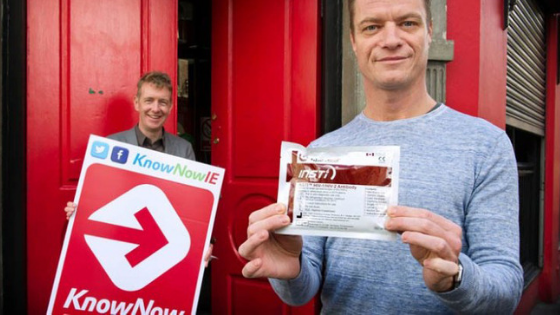
GLEN, The Sexual Health Centre Cork and GOSHH Limerick have launched a national HIV testing programme that will provide free testing.
KnowNow, Ireland’s first national free rapid HIV testing will provide free testing in Cork, Limerick and Dublin.
GLEN, The Sexual Health Centre Cork and GOSHH Limerick today launched a free national HIV testing programme which will provide free testing in a non-clinical setting, provided by a team of volunteers. Testing points will be located in a variety of places in Limerick, Cork and Dublin, including Pantibar, on Capel Street.
According to the latest diagnosis figures, HIV remains an issue of critical concern for gay and bisexual men. The figures for 2015 show that this demographic is the group most likely to contract HIV in Ireland. The need for men to know their HIV status is more important than ever, and the stigma around HIV needs to be eradicated.
Rory O’Neill, aka Panti Bliss, was on hand at the official launch of the national HIV testing project, saying, “There is still far too much stigma around HIV and knowing your HIV status. As part of tackling that stigma we need to provide opportunities to test for HIV that are convenient, affirmative and that are provided how, when and where is most appropriate for the people we are encouraging to test. Pantibar are delighted to support the project and have testing take place in our bar”
Tiernan Brady, director of Gay HIV Strategies for GLEN added, “KnowNow, the new rapid HIV testing pilot is an exciting and innovative new approach to enabling more people to know their HIV status. If people have HIV then the earlier they become aware of their status the better it will be for their long term health outcomes. In addition, most HIV is transmitted by people who are unaware that they have HIV, so early diagnosis can further reduce onward transmission rates”.
The Journal.ie: Irish dentists refusing to treat HIV positive patients 'adds to stigma'
The “worrying” levels of HIV diagnoses have been discussed at the Oireachtas Health Committee. There are set to be more cases of HIV in Ireland in 2015 than in any other year.
The “worrying” levels of HIV diagnoses have been discussed at the Oireachtas Health Committee. There are set to be more cases of HIV in Ireland in 2015 than in any other year.
HIV DIAGNOSES IN Ireland are increasing with 25% more cases of the virus discovered in Ireland so far this year compared with 2014.
The levels of HIV diagnosis here were discussed yesterday at the Oireachtas Health Committee at Leinster House.
Currently there are 3,500 people living with HIV in Ireland, executive director with HIV Ireland Niall Mulligan told the committee.
In 2014, 342 new cases of HIV were diagnosed here while in 2013 the figure stood at 377.
Provisional figures up to November for 2015 show that 427 new cases of HIV have come to light, an increase of 85 on last year with one month of the year to go.
203 people were diagnosed in the first half of this year, a rate of more than one person per day.
“Currently 30% of people who have HIV are unaware that they have it,” said Mulligan, citing a World Health Organisation (WHO) figure.
“There is a lack of access to testing and a lack of awareness regarding the disease.”
Of the new diagnoses in Ireland this year, 85 were men who had had sex with men, 38 came from heterosexual encounters, and one was a child who had the virus passed onto them by their mother.
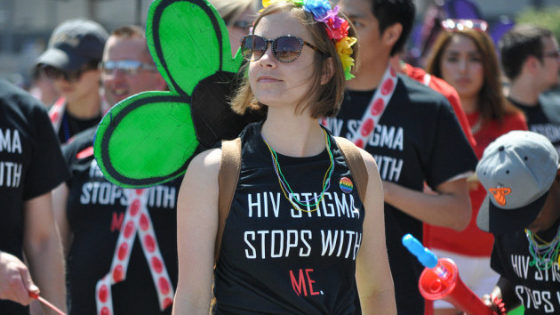
Mulligan expanded in his remarks to the committee on the stigma that is associated with HIV. Indeed stigma was a word repeatedly used by all three people appearing at the meeting.
By way of example, he cited cases in which HIV Ireland have dealt with people experiencing discrimination:
A man who had landed a job on a cruise ship was let go two days later when his positive HIV status became known
HIV Ireland had to convince a creche manager that he didn’t need to inform all of his clients of the fact that one child in his care was HIV positive
Some dentists in Dublin have either been referring HIV positive patients to community dental schemes, or else scheduling them as their last appointment of the day to “reduce the risk of cross-contamination”
“The negative aspects to a disclosure of being HIV positive are very real. People do not recognise the chaos that such a diagnosis can cause to a person’s career, their college life. At present there are 50 countries around the world that a person with a HIV positive diagnosis cannot travel to,” said Mulligan.
We work to help people navigate the disclosure. It can be quite a complex problem, both from society and as a form of self-stigma.
As regards the increase in rates of diagnosis, Deirdre Seery of the Cork Sexual Health Centre said that there is no concrete data as to why levels are increasing.
“Testing is greatly increasing which may go some way to explaining the figures,” she said.
It is possible that with treatment improving all the time, the lack of visibility of HIV and AIDS has made us complacent. There has undeniably been an increase in risky sexual behaviours.
“Our greatest challenge is to increase testing,” said Seery.
We also need targeted prevention. For most of this country it is ok to be gay. But for many that is still not the case. Many men who have sex with men do not acknowledge being gay.
These hidden populations are very difficult to engage with. By their very nature they’re hidden.
Sex education is effective. And by that I mean sex education, not just reproductivity.
The overall picture is “not good”, said Tiernan Brady, policy director with Ireland’s Gay and Lesbian Network (GLEN).
“Since 2005 we’ve seen a 200% increase in the number of HIV diagnoses,” he said.
This year will see the highest number of diagnoses on record.
Brady also bemoaned the fact that the average age of those who are diagnosed has dropped from 37 in 2005 to 31 today.
“More than anything else we need to make clear the importance of someone knowing what their status is,” he said.
The sooner someone knows the sooner they can begin treatment and the better their long-term health prognosis is.
Brady and Seery nevertheless say there is a lot to be positive about.
2016 will see the pilot of an outreach programme that will see one-minute free testing introduced, thus removing the stigma of attending a medical facility. This type of testing has already been introduced in Limerick and Cork.
Seery also spoke glowingly of the success of Pre Exposure Prophylaxis (PREP), a pill for preventing HIV negative people who are exposed to the virus from contracting it.
“What’s important now is to figure out who the people are who need this drug most, and to make sure that they get it,” she said.
Irish Examiner: HIV is not death sentence
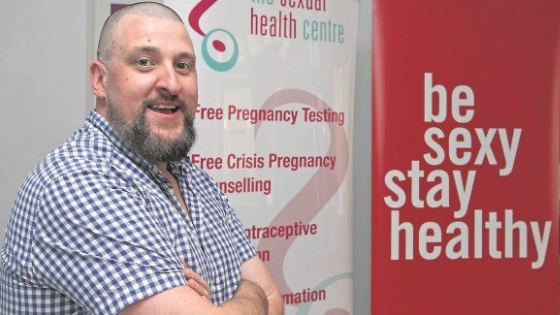
Philip Corcoran of Cork’s Sexual Health Centre urges men and women who are sexually active and taking risks to have a HIV test. It save lives and halts infection.
Philip Corcoran of Cork’s Sexual Health Centre urges men and women who are sexually active and taking risks to have a HIV test. It save lives and halts infection.
Since its inception in 1987 the Sexual Health Centre has been closely associated with the development of care and support services for people living with HIV. HIV, (which stands for Human Immunodeficiency Virus), attacks the cells which would normally protect the body from illness. There is no cure for HIV and once somebody has the virus, they have it for the rest of their life.
In the early days of the Sexual Health Centres’ work with HIV positive people, the virus was seen as a death sentence. Over the last 28 years the life experience and expectations of people living with HIV has changed dramatically. Due to the effectiveness of the treatments, it is now possible for HIV positive people to live full and active lives. However, because of the stigma attached to being HIV positive many people who are aware of having placed themselves at risk are reluctant to go for testing.
Many HIV positive people may be unaware of the fact, and may not have any concern because they feel fine - in the meantime, the virus will be free to attack and weaken the person’s immune system. If left untreated the body will no longer be able to fight off infection and HIV can then lead to AIDS. This is when a person’s immune system is so weakened, that it can no longer fight off infection. For this reason early diagnosis is very important for a person’s long term prognosis. Early diagnosis is also very important in reducing transmission of the virus to sexual partners, as newly infected people are highly infectious.
According to the recent report from the Health Protection Surveillance Centre there were 377 new cases of HIV in Ireland in 2014. This is an increase of 11% compared to 2013. Of the new cases 49% were men who have sex with men, 33% were heterosexual and 7% were injecting drug users.
If a person has engaged in an activity which they feel has put them at risk of acquiring HIV they can access Post Exposure Prophylaxis or PEP from their local A&E department. PEP can reduce the likelihood of contracting HIV but the course needs to be started within 72 hours of the risk activity taking place.
Also, a study in the UK has shown that Pre-Exposure Prophylaxis or PrEP can cut the risk of contracting HIV by 86% if it is given to people when they are healthy. There has been much discussion in other countries in relation to PrEP but very little in Ireland to date.
HIV, however, is preventable. Correct use of condoms greatly reduces the risk of spreading the virus and most other STIs. It is not who you are, it is what you do that will dictate whether or not you acquire HIV or any other STI. Anybody can get HIV if they do not protect themselves.
The virus cannot be transmitted through any of the normal social day to day interactions we have with other people such as hugging, kissing or sharing cups. HIV can only be passed on through the exchange of blood, semen, vaginal fluids or breast milk. Despite this - HIV positive people face stigma & discrimination.
The Sexual Health Centre has been providing a Rapid HIV testing service for a number of years now and when people attend, they will have their results within half an hour. Most people will develop antibodies which can be detected by a test within two to eight weeks.
When people present at the Sexual Health Centre for a test, they are given the opportunity to discuss their fears around the result. Many people report anxieties about how their lives will change and worry about other peoples’ judgements. If a person receives a positive diagnosis, they are not left alone to deal with the result, counselling support is provided at the centre free of charge, for as long as the person needs it.
In the event of a negative result people are advised on how they can reduce their risk of acquiring HIV in the future. Counselling can also be offered to help people change behaviours which may be putting them at risk.
If people are concerned that they have put themselves at risk they should access testing. Early detection and treatment can mean that HIV positive people can live as long as people who are living without HIV. The treatment for HIV also greatly reduces the risk of transmission to other people. An ongoing study is examining the risk of sexual transmission of HIV by people on treatment. Couples where one partner was HIV positive and on treatment were recruited for this study. No HIV positive person with an undetectable viral load, gay or heterosexual, was found to transmit HIV to their partner in the first two years of the study. These early findings highlight the importance of treatment as a means of reducing transmissions.
Our advice to people is very simple, know your status, get tested.