
Red FM Events: Screen-age kicks
The Sexual Health Centre is please to announce a FREE, four-part training programme that will guide professionals on how to effectively and safely respond to young people’s sexual health queries and concerns.
Upcoming Themes:
Sept 15th 2020, 12 noon: Relationships, consent, and pornography
Oct 13th 2020, 12 noon: Contraception and STIs
Nov 10th 2020, 12 noon: Gender and Sexuality
Dec 15th 2020, 12 noon: HIV awareness
Certificate of Attendance for all who join.
Register Today: https://www.eventbrite.ie/e/screen-age-kicks-youth-sexual-health-in-the-virtual-world-tickets-118130350057
Price: FREE
More Information (Cork's RedFM is not responsible for external websites)
The Avondhu: “For homeless people, rape is a constant fear”
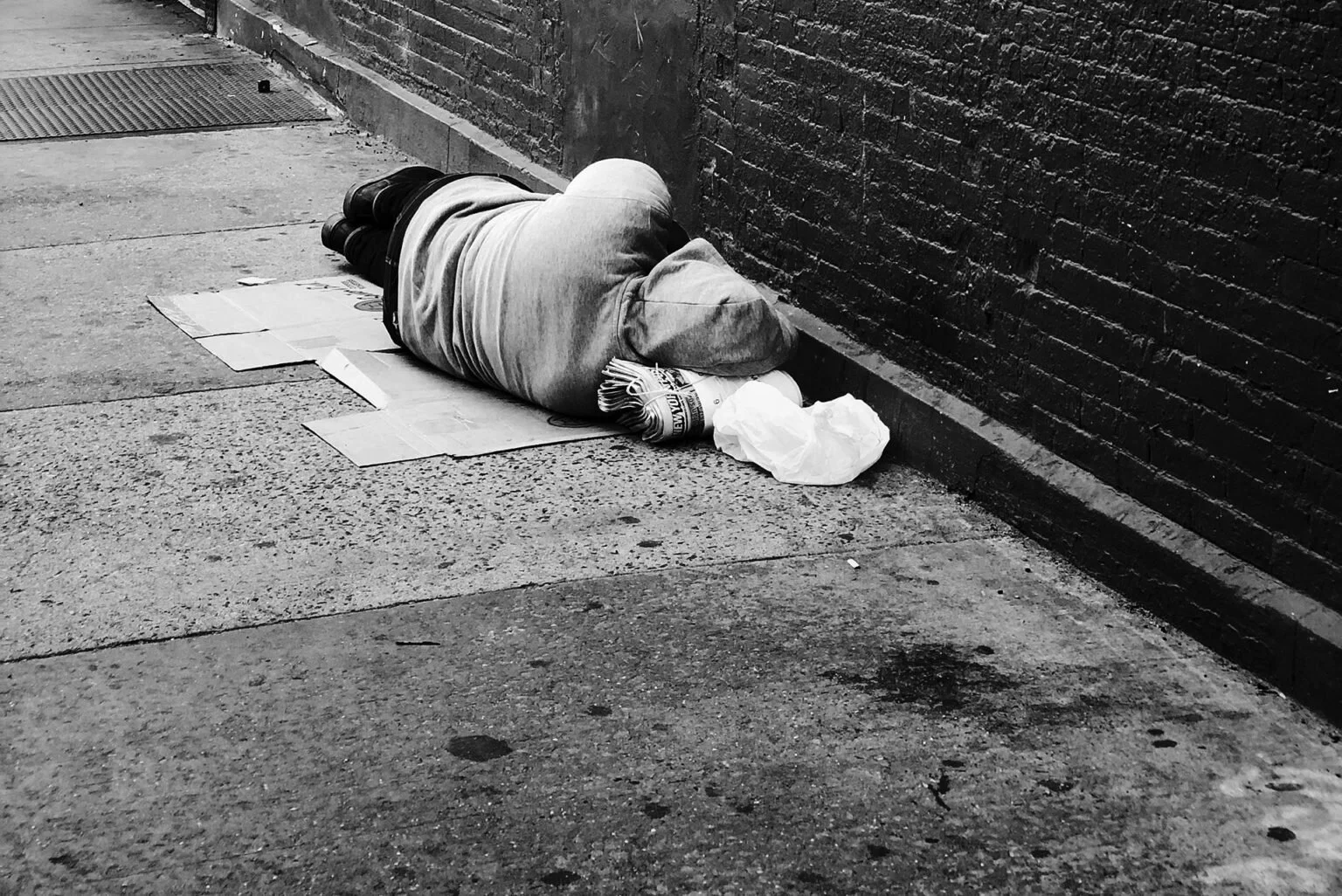
Cork Penny Dinners co-ordinator Catriona Twomey has spoken out against sexual assaults against homeless people on the streets of Cork City, something she says is a regular occurrence hidden in plain sight.
“Women are being raped on the streets of Cork – and some men are too – and they have no place to go, no-one to turn to, and they are left to just curl up in a ball on the street, in the Taoiseach’s home-town.”
Catriona Twomey is one of the most trusted and respected people in Cork. Her words carry weight, and when she speaks, people listen. Catriona has no agenda, bar the one she advertises clearly. Seven nights a week she is out on the streets with volunteers from Cork Penny Dinners, and seven days a week, 52 weeks of the year, they feed and look after the people the rest of us walk past and ignore.
Last week Catriona Twomey recounted to Sarah Horgan of The Echo her own recent experience of physically preventing a man from raping an unconscious homeless woman. She also described a similar incident in which another homeless woman was attacked. In both cases the assailants were also homeless and known to their victims.
When I spoke with Catriona about that interview, she was at pains to tell me: “Most of the homeless men in Cork are fabulous people, the vast, vast majority of them are, and indeed some of the homeless men in Cork have themselves been sexually assaulted.”
Covid-19 has necessitated a change in the way Cork Penny Dinners does its business, with the lockdown seeing the charity’s doors closed for the time since it was founded in the days of the Famine. Nowadays, anyone calling to Penny Dinners is provided with a takeaway dinner, and volunteers set out every evening from Little Hanover Street around half-seven, the big white van heralded by a vanguard of outriders on bicycles, the Cork Penny Dinners Knight Riders. They cover the city and they deliver hot meals to homeless people in B&Bs and hostels, and to rough sleepers all over Cork. Some of the lads on bikes are former homeless people themselves, and some are recovering addicts.
I asked Catriona if she is concerned about a rise in sexual assaults against homeless people in Cork.
“I’m beyond concerned,” she said. “Words fail me, to be honest. I’m deeply, deeply worried.
“Rape can be a life-destroying event, but we tend to think of rape as a once-off, catastrophic occurrence. But for homeless women – and for some homeless men, too – being raped could be something that is happening to you several times a week, or even several times in a night.
“Rape is a horrific crime for anyone, at any time, something which can destroy your mental health, and ruin your sense of yourself, but for homeless people, especially homeless women, rape can almost be a fact of life.
“And maybe it can become easier to allow the assault to happen to you than to try to defend yourself, because you feel you have nobody to defend or protect you, and if you try to stand up you might end up dead.
“For most of us, though, if – God forbid – we were attacked in such a way, we would hope to at least have a network around us, family, friends, and the knowledge that the Gardai and people like Mary Crilly of the Sexual Violence Centre in Cork are there for us.
“The Sexual Health Centre, around the corner from us on Peter Street, do brilliant work, and I think it’s important to let people know that service is there.
“The Gardai are simply brilliant. They are always the soul of kindness to members of the homeless community, and I have seen them, time and again, go above and beyond the call of duty to help people in need, and I’ve seen how gentle they are with survivors of sexual crimes. I’ve often seen Guards left devastated by the things they see.
“But for homeless people, after they go to the Gardai, they have to return to the streets, and there can often be a fear of a backlash.
“You could go from reporting a rape to meeting your rapist again and again.”
“A scream wouldn’t help you.”
Lockdown made things worse for some homeless people, Catriona says: “A scream wouldn’t help you, because there was nobody there to hear you.” She says the isolation and loneliness of homelessness can be an aggravating factor for homeless victims of sexual assault.
“Can you imagine, though, being utterly alone, with no-one to help you? After you’ve been attacked in the most horribly personal way? Imagine if you had no-one to call on for help, or just a hug, and you felt you had nowhere to go to try and clean yourself up.
“Imagine if you had nowhere to go, even for a little cry for yourself.
Rape can be a concern for homeless men, too, she says: “Being raped or sexually assaulted is something which would probably never even cross the minds of most Irish men, but for some homeless men, no more than for homeless women, rape is a constant fear.”
Mary Crilly founded the Sexual Violence Centre – formerly the Cork Rape Crisis Centre – in 1983. Catriona Twomey calls Mary Crilly “My hero, my life-long hero. That woman has done more for Irish women, and for longer, than nearly anyone else has”.
Mary told me last week that she sees what is happening on the streets as a symptom of a wider problem in Irish society.
“One in five Irish girls or women will suffer rape or sexual assault in their lifetimes. Think about that. One in five girls or women, regardless of what community they are in, whether they are homeless or living in houses. Women who are homeless are far more vulnerable, and vulnerable women are seen, by a minority of men, as fair game.”
Speaking last week on Newstalk, Mary Crilly said she has spoken with countless women who are homeless as a result of sexual abuse suffered in childhood.
“They say to me, ‘I can’t keep count of the amount of times I’ve been raped. I was abused as a child, and I’ve been raped so many times, on the streets’ … most times they’ve been raped by someone they know, someone who might be homeless, or someone who’s befriended them. Like in any part of society, 80% of people are raped by somebody they know.”
Dr Sharon Lambert is a lecturer and researcher in the School of Applied Psychology, University College Cork, and her research into the childhood factors which contribute to homelessness chimes with the experiences related by homeless women to Mary Crilly.
“Homelessness in itself is a psychologically traumatic experience and many people experiencing homelessness are exposed to multiple traumas such as sexual violence and physical assaults. These extremely traumatic events impact on mental wellbeing and can increase the need for substance use to manage the distress. Services need to be mindful of the possibility of trauma histories in those who are homeless and understand that some behaviours that are viewed as challenging are in fact psychological trauma symptoms.”
On Newstalk, Mary Crilly said many of the women on the streets who suffer sexual assault and rape are often reluctant to press charges due to fear of the court process.
“They won’t go that far because they’ll say, ‘What is the point?’ That is the huge sadness about it. That something so horrific is happening to a human being in our society and they turn around and say what is the point? I won’t get justice; I won’t be believed; I am not worth it anyway; it doesn’t matter.”
“Get the people off the streets. It’s that simple.”
Noeline Blackwell, CEO of the Dublin Rape Crisis Centre, told me the sexual abuse of homeless people is a real problem hidden in plain sight everywhere, not just in Cork.
“We do awareness raising training with people working in homeless agencies and they tell us that it is a common risk for those who are homeless, especially rough sleepers. They are so vulnerable. Echoing Mary Crilly, this tends to remain hidden because of the lack of prosecutions due to many factors including lack of faith in official systems, a sense that they won’t be believed.”
Dr Cliona Sadlier, Executive Director of Rape Crisis Network Ireland, says that rape can be both a cause of homelessness and a risk arising from homelessness.
“Sexual violence against homeless people cannot be treated separately from the crisis that is homelessness. We have to treat this holistically, and to recognise that the homeless person’s most immediate vulnerability is homelessness. We have to put the person at the centre and then look at a multi-agency response.”
I asked Catriona Twomey what we can do to prevent the sexual assault and rape of homeless people on the streets of our towns and cities.
“Get the people off the streets,” was her response. “It’s that simple. Put the people first and get them off the streets.”
Catriona says that while a single issue might force a person into homelessness, homelessness will soon cause that person to have ten or more issues.
“I’m looking every day at the emptiness and despair in the eyes of human beings. Unless we are willing to invest in a full, wraparound system of support for homeless people, we won’t help them, and we’re wasting our time pretending we care.”
Noeline Blackwell concurs: “There are so many reasons to end rough sleeping – and the ever-present risk of sexual assault is just one of them. It would require a complex response to meet the needs of these very vulnerable people but the numbers aren’t huge and it could be done with commitment and resources.”
Sharon Lambert agrees that the best response to homelessness is to begin with housing.
“You have to meet people’s basic needs first before you can attempt any type of therapeutic treatments. People need physical and emotional safety to be able to address mental health and/or addiction. Housing first has been very successful in many regions.”
Mary Crilly, almost four decades on since the founding of the Sexual Violence Centre Cork, says that with one in five girls and women facing rape or sexual abuse in their lifetimes, Ireland needs to address its unspoken tolerance of sexual violence.
“Thirty-seven years we’re here. My most fervent wish would have been that we wouldn’t still be needed.”
I asked Catriona Twomey what message she would give to Darragh O’Brien TD, the new Minister for Housing.
“I would say to Darragh O’Brien this: A lot of people have been in that office before you, and you’ll either end up like them, or you’ll break the mould. And we desperately need you to break the mould.
“Between thirty and sixty people are sleeping on the streets of Cork, the Taoiseach’s home town, every night, and they are desperately vulnerable. Stop telling us there are enough beds. There aren’t. We need smaller hostels, and we need separation of people within those hostels. Older, younger, male and female. Stop lumping people in together.
“People are being raped on our streets. That they are homeless people doesn’t make them people any the less.
“Everybody has a story, and nobody is beyond help. So, please, Minister, help us.
“Help us, or go the way of all the other people who occupied that office.”
Echolive: Sexual health campaign aims to educate parents and youths
The Sexual Health Centre in Cork has come up with a campaign that addresses the relationship problems that people come up against online, say Barrie Deehan, pictured right and Olivia Teahan, pictured below.
The Sexual Health Centre in Cork has come up with a campaign that addresses the relationship problems that people come up against online, say Barrie Deehan, pictured right and Olivia Teahan, pictured below.
TECHNOLOGY has become an integral part of young people’s education, communication and relationships. This is particularly true in the context of the Covid-19 pandemic, and the lifestyle changes that have come with it.
Over the past number of months, we have all had to adapt our living, working and socialising norms. Communication now regularly requires technology, as we spend more time indoors and online. This has brought certain issues to the fore, such as online relationships, consent and pornography.
Considering how difficult it is to effectively regulate online content, it is imperative that young people are provided with unbiased, accurate and up to date information regarding the relationships and behaviours that they encounter while online.
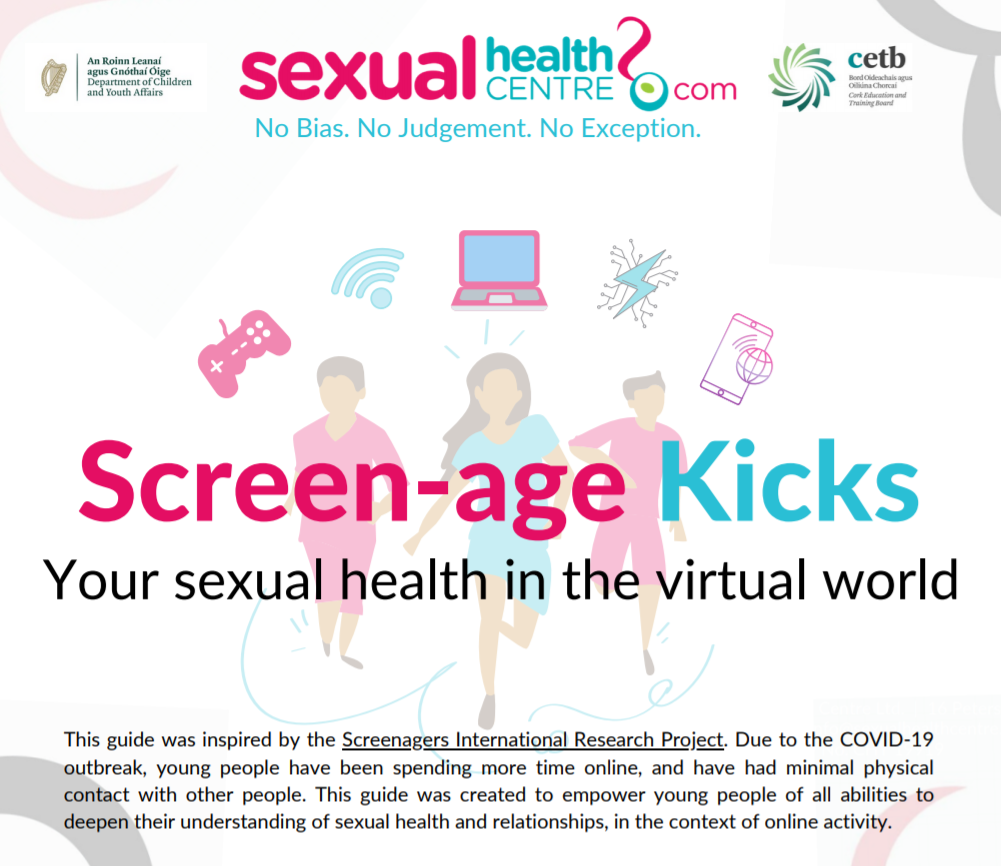
The Sexual Health Centre in Cork city has developed a timely response to this emerging need with a campaign entitled ‘Screen-age Kicks’, that addresses the relationship problems that people come up against online, while also incorporating Covid-19 messaging such as device hygiene.
The ‘Screen-age Kicks’ guide was inspired by a 2016 National Youth Council of Ireland report alongside information gathered by the Sexual Health Centre through their youth workshops and drop-in services.
While young people today experience the very same curiosity and self-exploration as their parents did as teens, this period of discovery has now been moved to the online world. The rate at which technology has grown in recent years has also meant that parents and guardians are often left to play catch-up when it comes to their teenagers’ development.
The ‘Screen-age Kicks’ guide is aimed at a wide audience, including adults who find themselves in need of information, such as parents, guardians, grandparents and workers involved with young people.
The guide is also targeting the young people themselves, offering clear, concise information and resources. It was produced with a view to encouraging young peoples’ critical thinking and to ultimately give them autonomy over the decisions they make regarding their sexual health. Ideally the Sexual Health Centre would like the guide to spark conversations that could help bridge the generational gap on topics such as ‘trolling’, consent, ‘sexting’, and porn.
Barrie Deehan of The Sexual Health Centre.
Guidance around teen health and relationships has been sorely needed in light of social distancing measures. For example, in the world of remote working and schooling, where an entire household may be at home around the clock, masturbation and porn are causing concern for many people. While we all acknowledge that porn is unsuitable for young viewers, the reality is that it is here to stay, and whether children seek it out or not, they will continue to be exposed to it in some format. What is most important is that these discussions are started with children in an informed, calm and non-judgemental manner. Pornography is as harmful as we allow it to be, and its impact is dependent on whether we educate young people about it in an appropriate way.
In the absence of open, honest conversations about sexuality and relationships, young people seek that information elsewhere. This has led to the porn industry becoming an unqualified, subjective and highly influential substitute educator where healthy sexual relationships are concerned.
Young people need to be given unbiased, up-to-date information so that when they do encounter pornography, they can clearly recognise fact from fiction and have developed the skill to analyse the content that they view. Many experts in the field, including NUIG researcher Dr. Kate Dawson, would refer to this ability as having “porn literacy”. A key aspect of porn literacy is that it should provide alternative points of view and allow for discussion in a safe and non-judgemental environment. Furnishing young people with porn literacy skills can empower them to reframe the narrative around pornography and foster healthier relationships.
While parents play an important role in ensuring that their children are informed, many are not yet equipped to facilitate that conversation. A significant proportion of Irish parents received an inadequate level of sex education themselves and were also not exposed to pornography in the same way as their children. The Sexual Health Centre’s Health Promotion team can offer guidance to you, whether you are a parent/guardian who is unsure how to open up the conversation on sexual relationships, or a young person seeking context to the content that you’re viewing online.
The Sexual Health Centre has adapted all of its services throughout the COVID-19 pandemic – for example, workshops and counselling services are now taking place online and over the phone, a free condom mail-out system is in operation, and you can contact us with any queries on our helpline at 021-4276676.
For more, see https://www.sexualhealthcentre.com/

EchoLive: Sexual health campaign aims to educate parents and youths
The Sexual Health Centre in Cork has come up with a campaign that addresses the relationship problems that people come up against online, say Barrie Deehan and Olivia Teahan.
TECHNOLOGY has become an integral part of young people’s education, communication and relationships. This is particularly true in the context of the Covid-19 pandemic, and the lifestyle changes that have come with it.
Over the past number of months, we have all had to adapt our living, working and socialising norms. Communication now regularly requires technology, as we spend more time indoors and online. This has brought certain issues to the fore, such as online relationships, consent and pornography.
Considering how difficult it is to effectively regulate online content, it is imperative that young people are provided with unbiased, accurate and up to date information regarding the relationships and behaviours that they encounter while online.
The Sexual Health Centre in Cork city has developed a timely response to this emerging need with a campaign entitled ‘Screen-age Kicks’, that addresses the relationship problems that people come up against online, while also incorporating Covid-19 messaging such as device hygiene.
The ‘Screen-age Kicks’ guide was inspired by a 2016 National Youth Council of Ireland report alongside information gathered by the Sexual Health Centre through their youth workshops and drop-in services.
While young people today experience the very same curiosity and self-exploration as their parents did as teens, this period of discovery has now been moved to the online world. The rate at which technology has grown in recent years has also meant that parents and guardians are often left to play catch-up when it comes to their teenagers’ development.
The ‘Screen-age Kicks’ guide is aimed at a wide audience, including adults who find themselves in need of information, such as parents, guardians, grandparents and workers involved with young people.
The guide is also targeting the young people themselves, offering clear, concise information and resources. It was produced with a view to encouraging young peoples’ critical thinking and to ultimately give them autonomy over the decisions they make regarding their sexual health. Ideally the Sexual Health Centre would like the guide to spark conversations that could help bridge the generational gap on topics such as ‘trolling’, consent, ‘sexting’, and porn.
Guidance around teen health and relationships has been sorely needed in light of social distancing measures. For example, in the world of remote working and schooling, where an entire household may be at home around the clock, masturbation and porn are causing concern for many people. While we all acknowledge that porn is unsuitable for young viewers, the reality is that it is here to stay, and whether children seek it out or not, they will continue to be exposed to it in some format. What is most important is that these discussions are started with children in an informed, calm and non-judgemental manner. Pornography is as harmful as we allow it to be, and its impact is dependent on whether we educate young people about it in an appropriate way.
In the absence of open, honest conversations about sexuality and relationships, young people seek that information elsewhere. This has led to the porn industry becoming an unqualified, subjective and highly influential substitute educator where healthy sexual relationships are concerned.
Young people need to be given unbiased, up-to-date information so that when they do encounter pornography, they can clearly recognise fact from fiction and have developed the skill to analyse the content that they view. Many experts in the field, including NUIG researcher Dr. Kate Dawson, would refer to this ability as having “porn literacy”. A key aspect of porn literacy is that it should provide alternative points of view and allow for discussion in a safe and non-judgemental environment. Furnishing young people with porn literacy skills can empower them to reframe the narrative around pornography and foster healthier relationships.
While parents play an important role in ensuring that their children are informed, many are not yet equipped to facilitate that conversation. A significant proportion of Irish parents received an inadequate level of sex education themselves and were also not exposed to pornography in the same way as their children. The Sexual Health Centre’s Health Promotion team can offer guidance to you, whether you are a parent/guardian who is unsure how to open up the conversation on sexual relationships, or a young person seeking context to the content that you’re viewing online.
The Sexual Health Centre has adapted all of its services throughout the COVID-19 pandemic – for example, workshops and counselling services are now taking place online and over the phone, a free condom mail-out system is in operation, and you can contact us with any queries on our helpline at 021-4276676.
For more, see https://www.sexualhealthcentre.com/
C103: Sexual Health Centre reopening in Cork
The facility was forced to close due to the Coronavirus pandemic
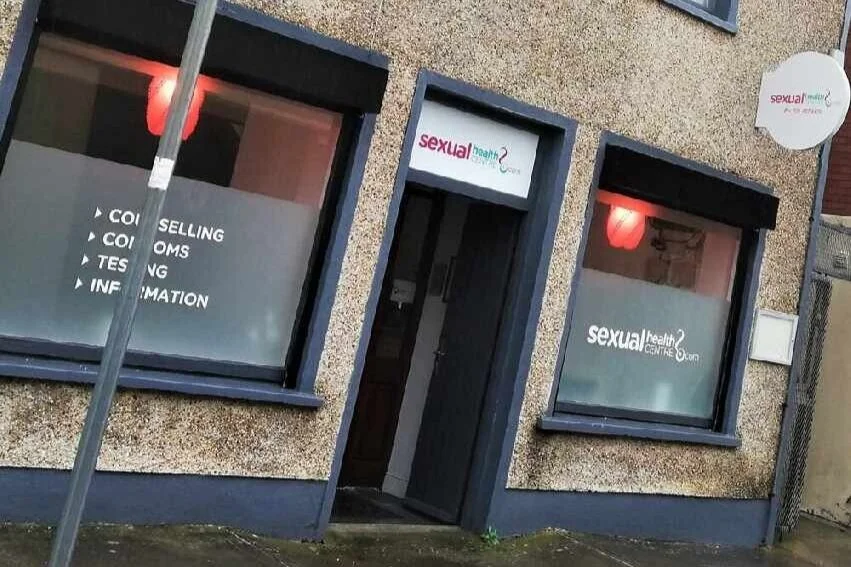
The facility which is located on Peter's Street in Cork City is to resume a number of it's services again that were suspended due to Covid19.
The Centre offers rapid HIV testing and a pregnancy testing service among others
and will now start seeing people by appointment.
Latest figures show 20 cases of HIV have been recorded
so far this year in Cork and Kerry.

96FM: Sexual Health Centre reopening in Cork
The facility was forced to close due to the Coronavirus pandemic
The facility which is located on Peter's Street in Cork City is to resume a number of it's services again that were suspended due to Covid19.
The Centre offers rapid HIV testing and a pregnancy testing service among others
and will now start seeing people by appointment.
Latest figures show 20 cases of HIV have been recorded
so far this year in Cork and Kerry.
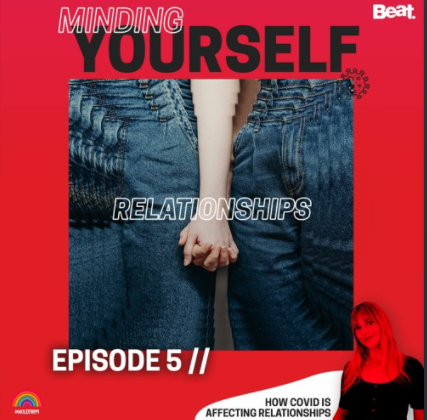
Beat 102 103: Minding Yourself Episode 5
Episode 5: Relationships
Lockdown kept some of us apart and put others on top of each other!
The pandemic placed a lot of stress on relationships, and couples and families have not had an easy time. Michelle speaks to Martin Davoren, Director of the Sexual Health Centre, about their new Guide to Navigating Healthy Relationships and managing conflict in close quarters.
She also speaks to relationships and sex therapist Natalya Price on how the pandemic has affected couples and seeks advice for those considering a new course for their relationship
Access the Guide to Navigating Healthy Relationships During the COVID 19 Outbreak here.
Listen: https://beat102103.com/covid-19/spotlight-on-minding-yourself/
https://soundcloud.com/beat102103/relationships

SpunOut: Young people deserve guidance around online relationships
The Sexual Health Centre has launched a campaign to raise awareness of issues young people face when spending more time online
The Sexual Health Centre has launched a campaign to raise awareness of issues young people face when spending more time online.
The Sexual Health Centre in Cork launched a campaign on Tuesday June 16th to raise awareness of the issues that young people may come up against online in the context of the COVID-19 pandemic.
Launch of ‘Screen-Age Kicks’
The centre have launched a guide called ‘Screen-Age Kicks - Your sexual health in the virtual world’ which was inspired by the National Youth Council of Ireland’s 2016 report on the ‘Screenagers’ international research project. It included consultations with young people regarding their experiences of social and digital media in the youth work setting.
Catherine Kennedy, the Centre Manager said “Digital and social media has opened up a world of opportunity for young people by enabling them to stay informed and connected, more than any generation before them. As much of the virtual world is difficult to regulate, it is important that young people are given unbiased, up to date information regarding the relationships and behaviours that they encounter, and engage in, online”. The guide includes information on topics such as ‘trolling’, ‘sexting’, communication skills, consent, and porn.
Guidance when it comes to COVID-19 and social distancing
Ms. Kennedy highlighted the need for guidance around young people’s health and relationships in the context of the COVID-19 pandemic and social distancing measures:
“As young people have been spending more time at home and online, issues around online relationships, consent and porn have come to the fore. Many Irish teens and parents have not been given the tools or guidance to deal with these issues during the pandemic, and the Sexual Health Centre is seeking to bridge that gap”.
The Sexual Health Centre provides free workshops on relationships and sexual health, for young people. Due to COVID-19 they are currently offering some services and workshops online.

Longford Leader: Sexual Health Centre launches campaign to give young people guidance around online relationships
www.longfordleader.ie/news/national/551172/sexual-health-centre-launches-campaign-to-give-young-people-guidance-around-online-relationships.html
![96FM: Sex talk [New Zealand Ad Campaign]](https://images.squarespace-cdn.com/content/v1/5c45bdd9f7939273c6d9f24b/1613509480222-9IVQCG8CVMZKU1E1P3LI/5d5fcd74516b3.png)
96FM: Sex talk [New Zealand Ad Campaign]
96FM
SEX TALK: A new ad campaign airing in NZ is designed to show parents that kids as young as 10 are consuming porn, and to open up an honest conversation with them. Now talking to @SHC_Cork
Listen back from 01:21:17
https://play.acast.com/s/corks-96-fm-opinion-line/2020-06-16acorktaoiseach-arethereanypublictoiletsleft-doctorscallingforaspecialcycleway-more
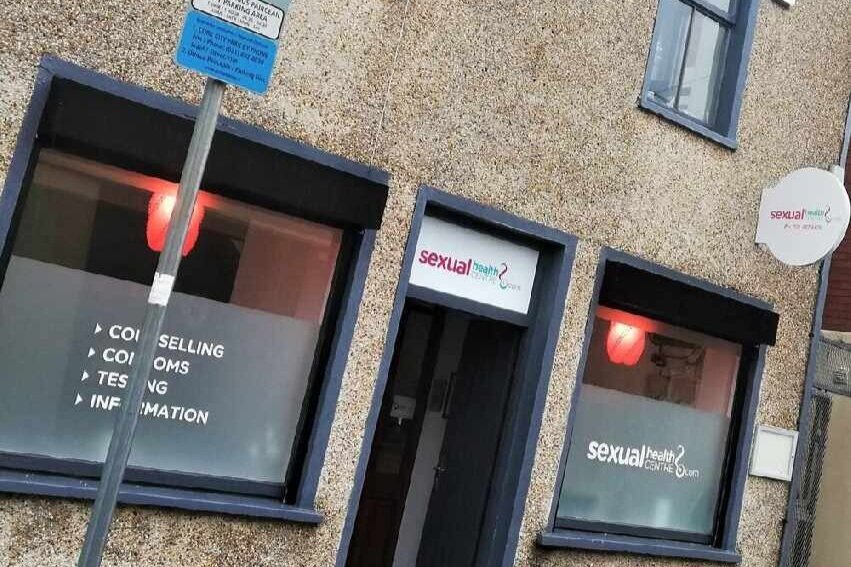
96FM: Sexual Health Centre Cork launch new campaign
The aim of the campaign is to raise awareness of the issues that teens may face online during the pandemic.
The Screen-age Kicks campaign is available here.
It deals with topics such as trolling, sexting, communication skills, consent and porn.

EMPWR.ie: Sexual Health Centre launches campaign aimed at helping teens navigate online sexual health
Screen-age Kicks helps parents and teens navigate online relationships including porn, sexting and consent
Screen-age Kicks helps parents and teens navigate online relationships including porn, sexting and consent
By Clodagh Meaney
Teenagers are growing up in a virtual world, and technology has become an integral part of their education, communication and relationships. This is a reality that the Sexual Health Centre in Cork has embraced.
The Centre have launched a campaign, Screen-age Kicks, to raise awareness surrounding issues that teens may come up against online during the COVID-19 pandemic.
“Digital and social media has opened up a world of opportunity for young people by enabling them to stay informed and connected, more than any generation before them,” noted the Centre’s manager, Catherine Kennedy.
“As much of the virtual world is difficult to regulate, it is important that young people are given unbiased, up to date information regarding the relationships and behaviours that they encounter, and engage in, online."
“The ‘Screen-age Kicks’ guide was inspired by the National Youth Council of Ireland’s 2016 report on the ‘Screenagers’ international research project, which included consultations with young people regarding their experiences of social and digital media in the youth work setting," Catherine Kennedy explained.
“While young people today experience the very same curiosity and self-exploration as their parents did as teens, this period of discovery has now been moved to the online world."
“The rate at which technology has grown in recent years has also meant that parents are often left to play catch-up when it comes to their teenagers’ development," she said.
The Screen-age Kicks guide covers internet trolling, sexting, online relationships, consent, pornography and masturbation.
"Parents and youth workers need to be equipped to approach these issues in an informed and practical manner."
Ms. Kennedy also highlighted the need for guidance around teen health and relationships in the context of the COVID-19 pandemic and social distancing measures.
“As young people have been spending more time at home and online, issues around online relationships, consent and porn have come to the fore."
“Many Irish teens and parents have not been given the tools or guidance to deal with these issues during the pandemic, and the Sexual Health Centre is seeking to bridge that gap," she said.
Parents and teens can access The Sexual Health Centre Cork's Screen-age Kicks guide here.




Echo Live: The Sexual Health Centre launches guide [Healthy Relationships]
https://twitter.com/SHC_Cork/status/1266294068855726080


EMPWR.ie: Cork Sexual Health Centre launch ‘how to’ guide for maintaining relationships during COVID-19
The guide aims to help people maintain relationships with themselves and others during the global health pandemic.
The guide aims to help people maintain relationships with themselves and others during the global health pandemic.
Marriages, family relations and other relationships are under increased pressure since the implementation of social distancing measures, Cork’s Sexual Health Centre has reported.
While many people have not had the opportunity to enjoy the company of their loved ones in months, others are with their partners or families all day, every day.
“During any kind of crisis, a common and natural reaction is to become increasingly judgemental and critical of yourself and others,” noted Catherine Kennedy, manager of the Sexual Health Centre.
“This pandemic has put immense pressure on people in their day to day lives. In light of this, self-awareness and communication skills are increasingly important for maintaining healthy relationships and a positive environment at home."
“It is normal to feel low and negative at times. The real issue lies in people not recognising their own emotional reactions," she added.
“In order to maintain healthy, honest relationships, it is essential to be aware of, and understanding of, your own emotions."
The comments come following reports of the Central Statistics Office's latest figures regarding the social impact of COVID-19. Those reporting high satisfaction in their personal relationships dropped from 60 per cent in 2018, to 42.2 per cent in April 2020.
The Sexual Health Centre has launched an online guide to navigating healthy relationships during the COVID-19 outbreak, in collaboration with Mr. Daniel Flynn, Principal Psychology Manager of HSE Cork South Mental Health Services.
“Everybody deals with relationship problems at some point in their lives, and it is natural to be feeling particularly challenged by your relationships during the pandemic," Catherine added.
“Since the implementation of social distancing measures, many people have had difficulty in dealing with emotional awareness, self-worth, interpersonal skills, isolation, cohabitation and intimacy. This guide addresses all of these issues and provides a toolkit for maintaining healthy relationships in the context of social distancing."
“Our team and free helpline service also provide free counselling and virtual workshops on relationships and wellbeing. All of our staff are fully committed to meeting clients’ needs and ensuring service delivery with no bias, no judgement, and no exception,” she concluded.
The guide covers issues such as self-worth, maintaining healthy relationships, interpersonal effectiveness, as well as isolation and cohabitation, intimacy and ideal date night activities.
The campaign is ongoing across the centre's social media accounts, as well as on their website. You can access the guide free of charge here.
Last month the centre launched a #SafeRSex campaign to help those in quarantine to avail of a free condom postal service.
Part of the campaign is also aimed at sex workers in order to assist those who need to continue working, with the charity encouraging workers to engage in services available to them at this time.
For further information you can contact the centre: info@sexualhealthcentre.com or on 021-4276676
96FM: Relationships tested by Covid-19 pandemic
Relationships are coming under increased pressure since the start of the coronavirus restrictions.
Relationships are coming under increased pressure since the start of the coronavirus restrictions.
A survey by the CSO found that those reporting a high satisfaction in their personal relationships dropped from 60% in 2018 to 42% in April this year.
The Sexual Health Centre in Cork has launched an online guide to healthy relationships including marriages, family relations, work colleagues and friends.
Speaking to Cork's 96FM & C103 News , Executive Director Dr Martin Davoren says the most important thing is to look at your relationship with yourself:
https://www.96fm.ie/news/96fm-news-and-sport/relationships-tested-by-covid-19-pandemic/

The Ryan Tubridy Show: Free condom postal service
https://twitter.com/SHC_Cork/status/1245274257942286336
https://www.rte.ie/radio/radioplayer/html5/#/radio1/11174168
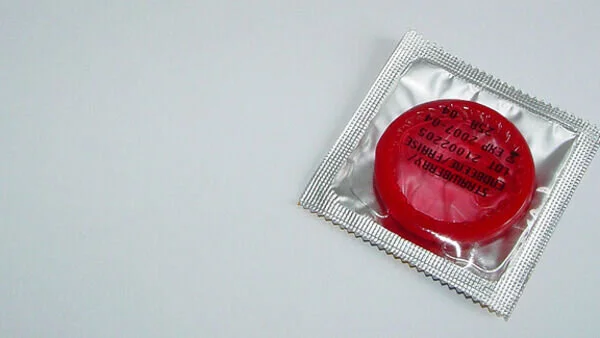
Irish Examiner: Centre in Cork launches free condom delivery service during coronavirus pandemic
A free condom delivery service has been launched to help people stay protected while at home during the coronavirus pandemic.
Cork's Sexual Health Centre has launched the initiative as significant restrictions have been placed on STI screening services across the country.
It has received a large number of queries from people who want to know how they can remain sexually active and safe at this time.
Dr Martin Davoren, Executive Director of the Sexual Health Centre, said it is vital people only have sex with their regular partner during the pandemic.
Dr Davoren said: "You can get condoms through our free postal condom service through the sexual health centre, you just ring our helpline to get information on that.
"How you could be at risk of contracting an STI at this point in time and the importance of only having sexual contact with an individual within your household, so your regular sexual partner, and reducing your risk at every point in time, so not going towards hook-up apps."
GCN: Sexual Health Centre Cork launch campaign about sex during COVID-19
The new #SafeRsex campaign is helping to keep people informed about sexual health during the coronavirus pandemic.
The new #SafeRsex campaign is helping to keep people informed about sexual health during the coronavirus pandemic.
The Sexual Health Centre is a NGO based in Cork that provides unbiased information and offers non-judgmental support regarding sexual health, well-being, and sexuality. Since 1987 the Sexual Health Centre has been dedicated to providing the community with a wide range of services and this commitment has not wavered in the wake of COVID-19. The organisation are now helping keep the public informed about sexual health during the coronavirus pandemic through their new #SafeRsex campaign which was launched across social media this weekend.
Using the online #SafeRsex campaign, the Sexual Health Centre have been able to dispel some of the myths surrounding coronavirus and safe sex through factual and easy to understand posts regarding a wide range of sexual activities.
As well as preventing further transmission of the coronavirus through sexual activities, the campaign also urges those who are sexually active to use protection such as a condom or a dental dam to prevent sexual transmitted infections (STIs). Last year, 2019, the HSE Health Protection Surveillance Centre (HPSC) reported a significant rise in the number of STIs reported in 2018. With STI testing services currently limited due to COVID-19, it is extremely important to practice safe sex to protect both yourself and your sexual partner(s).
Furthermore, if you have a suspected or confirmed case of coronavirus it is imperative that you implement self-isolation and avoid any kind of physical contact, which of course includes sexual activity, and in particular kissing, where droplets can transfer the virus. It is important to follow the guidelines for hygiene provided to prevent the spread of infection to others in your home, including your sexual partner(s).
As well as this valuable information, despite the centre having to close due to safety measures, they are working overtime to continue to meet the needs of the community. This includes a long list of free and vital services available via phone or email such as condoms being delivered by post and counselling services continuing.